
This month’s annotated transcript will go out to paid supporters after the holiday weekend. Last year, Alice Schroeder spoke to the Australian Broadcasting Corporation about Warren Buffett’s decision to retire — and looked back on his illustrious career and ahead to Berkshire Hathaway’s future without him. It’s a conversation about legacy, continuity, and what — if anything — is truly irreplaceable about the way Buffett ran Berkshire.
So, if you’ve been on the fence about upgrading, there is no time like the present.
(1) Berkshire Hathaway’s Q1 2026 investment report totally lived up to the hype. As the Wall Street Journal telegraphed last month, new CEO Greg Abel did indeed sell off most or all of Todd Combs’s portfolio following his departure to JPMorgan Chase. In Game of Thrones parlance, this was “The Red 13-F” with securities cut down right and left. Gone are Visa, Mastercard, Domino’s Pizza, UnitedHealth, Pool Corp., Amazon, Aon, HEICO, Lamar Advertising, Charter Communications, Allegion, Diageo, Liberty Formula One, Liberty Latin America Series A & C, and Atlanta Braves Holdings.
Some of this was predictable — especially the financial names — but the scope of this purge surprised me. (I figured Domino’s was a Ted Weschler pick.) And the exodus may not be over. Constellation Brands could be next to go after Berkshire slashed it by 95% in the first quarter. That rarely bodes well for a stock’s longevity.
Other sales of note include a modest trim of Bank of America and a bigger whack at Chevron. Despite being two of Berkshire’s largest positions, neither was named by Abel in his shareholder letter as a part of the permanent-ish Core Four — so these reductions are not wholly unexpected. Nucor also got chopped by nearly 40%.
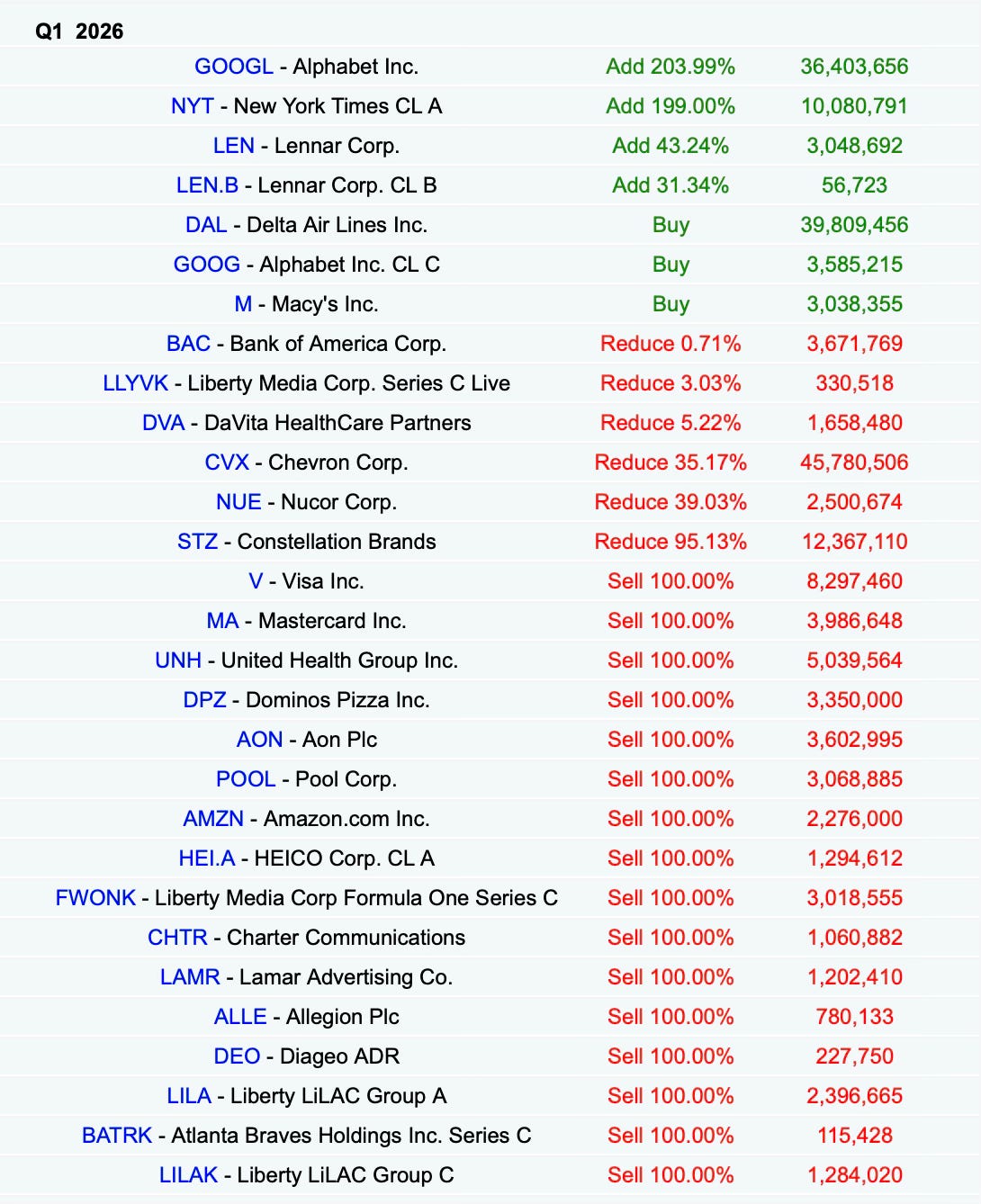
(2) On the buy side, Berkshire made a big statement by more than tripling its stake in Alphabet. This ~40 million share splurge catapulted the Conglomerate Formerly Known As Google up to the fifth-largest holding in the portfolio. If this is Greg Abel’s opening move as architect of Berkshire’s investment strategy, he’s announcing himself with conviction rather than caution. All told, between the Class A and Class C shares, Berkshire’s total Alphabet position is now valued at over $23 billion. Serious stuff.
Alphabet remains a constellation of dominant brands and services. Google Search — still the most valuable piece of internet real estate ever built — YouTube, Android, Google Cloud, Gmail, Waymo, and on and on and on. Not to mention its 6.11% stake in SpaceX, which is set to go public next month.
A year ago, Alphabet was being written off as a casualty of the ChatGPT moment — a legacy giant caught flat-footed by AI advancement. But it managed to upend that narrative with the roll-out of Gemini and the durability of its core Search franchise. To wit, Alphabet grew revenue by 22% to $110 billion in the first quarter.
(3) On March 31 — the final day of the quarter — Warren Buffett told CNBC that he recently had made “one tiny purchase” for Berkshire’s portfolio. As someone of much more limited means than Mr. Buffett, I don’t know exactly what “tiny” means to a man of his wealth. Alphabet ($23 billion) almost certainly doesn’t qualify, leaving a few different possibilities. One of which is Delta Airlines.
Yes, Berkshire has once again returned to the skies — an industry it has a complicated, checkered history with. (See USAir in 1989 and Buffett’s airline exit during the pandemic.) He once jokingly described himself as an air-o-holic, who needed to be gently talked down before making big bets on the airline industry.
Might Buffett have saddled up for one last spin in the clouds before the end?
(Update: Nope. One of the risks of having a million Google News Alerts set up for Berkshire and its many subsidiaries and investments is that occasionally an important item gets lost in the shuffle. Buffett told the Wall Street Journal earlier this week that he didn’t buy Delta.)
Delta’s premium segmentation strategy maximizes revenue from high-value business travelers — while still offering a full range of fare classes for the cost-conscious. And, as a commenter kindly pointed out, Delta is also the only major domestic airline with its own oil refinery, which processes crude oil directly into jet fuel.
(4) Another candidate could be Berkshire’s new $60 million Macy’s position — though this might be too small for Buffett. How tiny is too tiny? Ted Weschler once made beaucoup bucks on Dillard’s in his personal portfolio, so I would lean towards him on this one. Department stores face an undeniably murky future (and that’s being kind), but Berkshire apparently sees something in the rubble worth owning. Perhaps playing the long game on Macy’s valuable real estate.
The company’s Bold New Chapter strategy involves closing sprawling legacy stores that made more sense in 1986 than 2026 — and pivoting toward smaller-format setups and premium brands like Bloomingdale’s. Macy’s e-commerce also seems farther along than other old-school department store survivors, with $7.6 billion in digital sales last year representing 35% of total revenue.
And, if nothing else, Macy’s sells only the finest chocolates and candies.
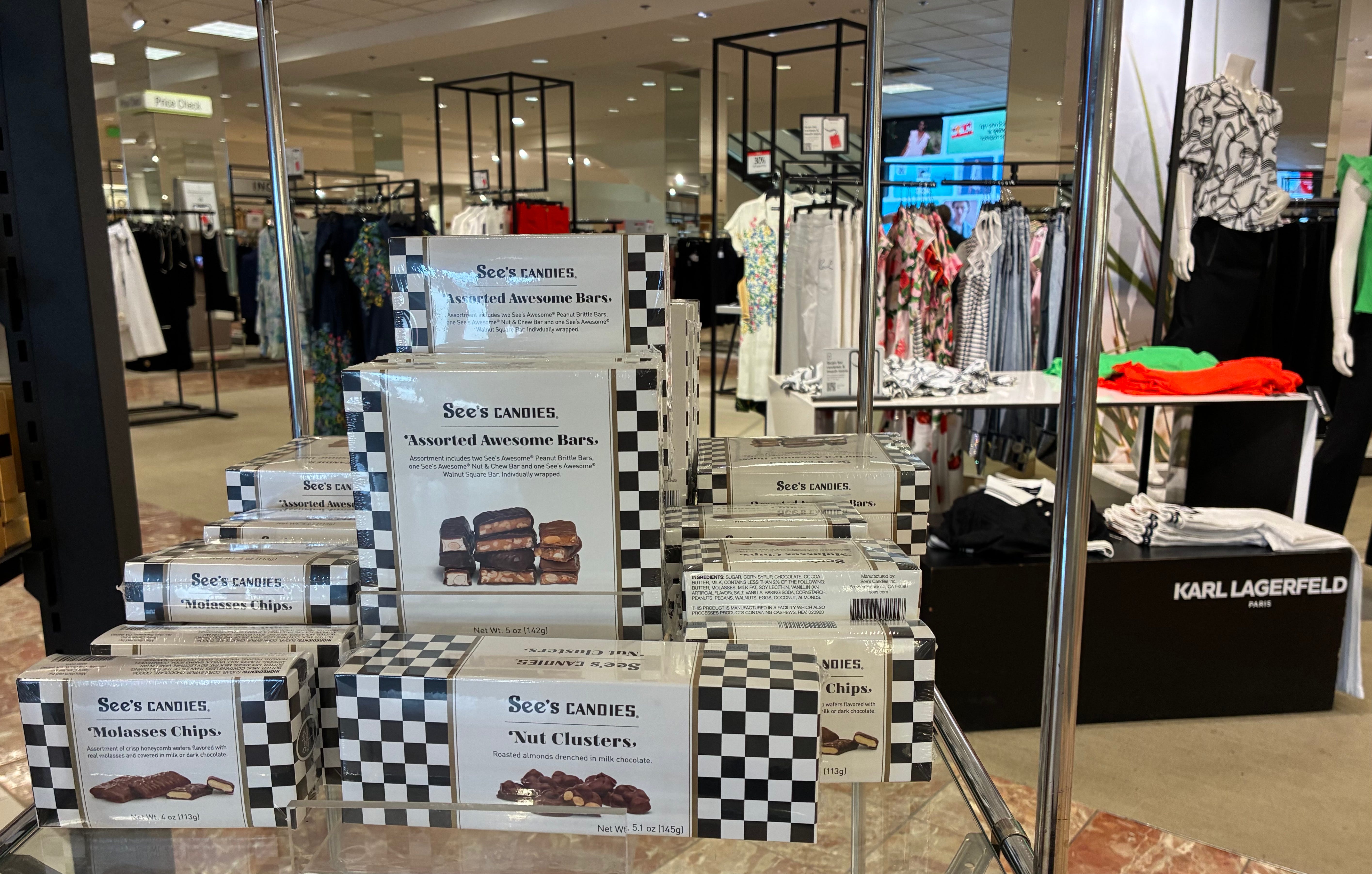
Berkshire also topped up its stakes in Lennar and the New York Times during the first quarter. I personally took Buffett’s “tiny” comment as referring to a new investment, but that might just be me. Either of these two could just as easily fit the bill.
(5) I’ve always appreciated how Buffett talked up his Coca-Cola investment by counting how many drinks are consumed worldwide each day — and what slice of that consumption belongs to Berkshire. A small rhetorical habit that reinforced these were not just ticker symbols to mindlessly trade, but actual businesses that Berkshire owned pieces of — one transaction at a time.
Few investors think that way. Fewer still talk that way.
Circling back to Alphabet, its Android mobile operating system powers somewhere between two-thirds and three-quarters of the world’s smartphones. And Apple’s iOS accounts for another ~25%. Which means Berkshire, through its stock portfolio, has a finger in billions of indispensable devices that people check hundreds of times a day.
(6) BNSF Railway will be America-maxxing this summer with three new locomotives all decked out for the country’s 250th birthday. Some of the patriotic details include special engine numbers (250, 1776, 2026); “We the People” emblazoned on the side; and a circle of stars evoking the Betsy Ross flag. “Few institutions are woven into the fabric of America quite like the railroad,” said CEO Katie Farmer. “For nearly two centuries, railroaders have [shaped] the American story, connecting communities, powering economic growth, and strengthening the nation we call home.”
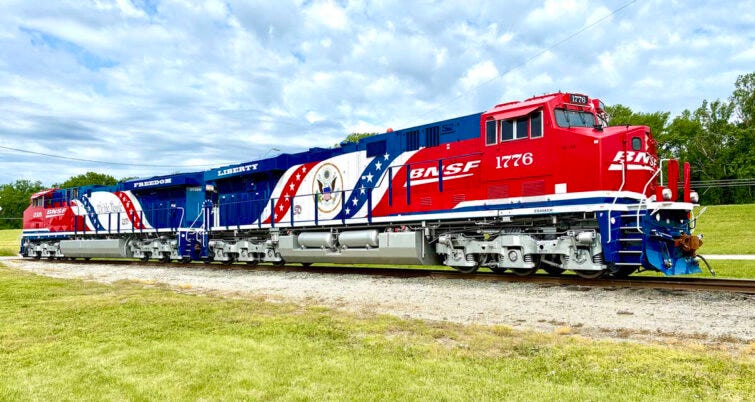
She’s not wrong. BNSF’s own lineage runs through roads like the Atchison, Topeka and Santa Fe — one of the great arteries of westward expansion. Railroads stitched the continent together, decades before the interstate highway system, generations before commercial aviation, a century before the internet. The country that exists today was built, in no small part, on top of the rail network.
(7) The Financial Times profiled hedge fund manager Chris Hohn this week, calling him “perhaps the closest thing Britain has to Warren Buffett”. The two men speak regularly and Hohn embraces the concentrated, disciplined investment style of his nonagenarian friend. They share more than mutual administration, though, as both hold significant stakes in Moody’s, the credit ratings giant. “Buffett told me,” said Hohn, “[that] if the financial crisis didn’t kill [Moody’s], nothing will.”
What makes Hohn so formidable isn’t just what he buys — it’s how he thinks. “Chris has an incredible ability to think in black and white,” said former UK prime minister Rishi Sunak, who used to work with Hohn. “He focuses on one, maybe two things that drive the investment thesis and then has the confidence to scale up the bet so it’s a big part of the fund.” Hohn fishes in a deliberately small pond — an investable universe of just over 200 companies — and holds his positions for nine years on average.
(8) Coca-Cola recently hosted the FIFA World Cup Trophy Tour in Atlanta — and local outlet Saporta Report caught up with new CEO Henrique Braun. He may be new to the title, but Braun and Coke go way back. As a young man, he played soccer with friends on the beach in Brazil — with a liter of Coke awarded to the winners.
And while fizzy beverages remain the core of the company, Braun noted that 75% of Coca-Cola’s 32 billion-dollar brands are of the non-sparkling variety. “Fifty percent were brands we acquired,” he added. “Sometimes people forget that. Three of them we bought were already higher than the $1 billion mark. But, everything else, we bought below a billion.” In other words, Coke is not limited to purchasing finished products, but still retains the ability to nurture and scale growing brands.
(9) On a recent earnings call, Tokio Marine managing executive officer Brad Irick offered a bullish assessment of the company’s strategic partnership with Berkshire Hathaway. He framed the arrangement as a force multiplier for two of the strongest businesses in the world. “I don’t think it’s a question of needing Berkshire Hathaway,” he said. “I think it is a question of whether it enhances the capabilities that we have. And it absolutely does. It enhances the flexibility [and] brings potential deals into the realm of possibility for us that might not have been there before.”
“It may [also] be the flexibility to do more than one deal,” continued Irick. “I think we had quite a capability of delivering on M&A previously [and this] is enhancing that capability. And what better partner could we possibly have to really focus on that?”
(10) Johns Manville CEO Bob Wamboldt will retire on August 1 after nearly six years at the helm, passing the reins to engineered products president John Vasuta. “It’s an extraordinary privilege to step into the role of CEO,” said Vasuta. “I’m deeply honored to continue serving our customers and supporting the employees whose dedication makes our success possible.” Wamboldt predicted that his successor will “guide the company to even greater success”.
And, in another notable shake-up, BNSF Railway COO Matt Garland stepped down after just five months on the job. In comes Craig Morehouse, who most recently served as senior vice president of network, operations, and service design. “Craig’s proven leadership, experience, and firsthand knowledge of our network [will] position BNSF to achieve operational excellence,” said CEO Katie Farmer.
Buffett told the Wall Street Journal that he didn't give Abel the Delta Airlines idea and NAIC filings show it was purchased by the broker Ted Weschler uses (Glen Eagle Wealth) so that sounds like a Ted pick.
I am wondering how they decided to choose between two different symbols of Google.