
The Financial Times once noted that Himalaya Capital’s office “is carbon copied from Berkshire Hathaway” and often feels more like a library than an investment fund with billions of dollars under management.
“We joke that Himalaya is an academic institution where Li Lu is the professor, I’m the teaching assistant, and the analysts are the students,” said chief operating officer and managing director Jing (Gene) Chang.
But, today, we get to be the students.
A reader kindly sent me the transcript of a recent conversation between Jing Chang and prominent Chinese economist Guan Qingyou, in which the Himalaya executive discusses value investing, market psychology, intellectual honesty, and much more.
I’ve collected forty of Chang’s best comments from the interview below.
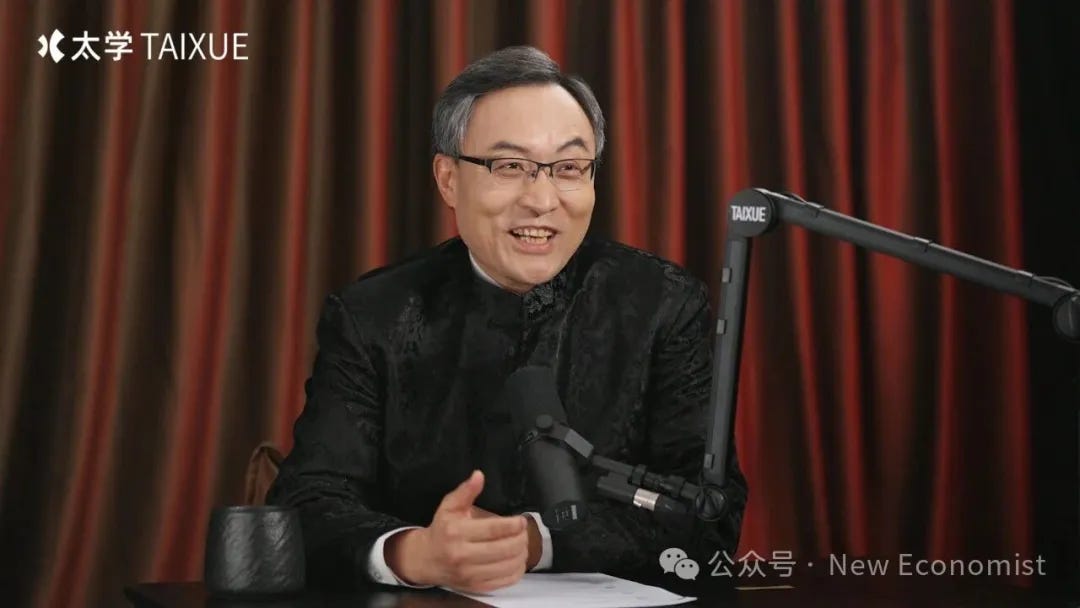
(Note: As far as I know, this conversation was never translated into English — so I had to lean heavily on translation software here. I also slightly cleaned up some of the wording to make it more readable and understandable, but without changing the meaning of Chang’s comments. The result is probably more stilted than hearing him speak in his native language, but I think I managed to capture his main message in a clear way for us English readers.)
For a quick background on Chang himself, he was born in China and came to the United States in 1990. He met Li Lu as a student at Columbia Business School in the mid-nineties and now works side by side with his friend at Himalaya, where Chang also ranks as the longest-serving employee (other than Li Lu himself). He was involved in translating and publishing Poor Charlie’s Almanack in China and even helped start a value investing course at Peking University in 2015.
(1) “If we do things as objectively and rationally as possible in the little things in life, it can also help us to remain objective and rational in major investment decisions. I think the two are one. If we don’t have the spirit of objectivity and rationality in our daily life, how can we guarantee that we will suddenly be objective and rational when making major decisions?”
(2) “For value investors, the role of the stock market is only to tell us a ‘price’. It cannot tell us what the ‘value’ of the company is.”
(3) “The core principle of value investment [is that] we must have a margin of safety. It will help us screen out the vast majority of companies that do not meet our standards. The targets left behind will be much safer to invest in — and the probability of failure, especially the possibility of permanent damage to principal, will be much smaller.”
(4) “If there is enough margin of safety, we don’t have to worry about the short-term fluctuations of the market at all.”
(5) “Of course, when the market fluctuates significantly, it will challenge the underlying logic of our understanding of the company. Was my past judgment right? Is this judgment sustainable and reliable? Am I sure that the company will be able to survive this fluctuation? If we can be sure of this, we definitely don’t need to sell. Instead, we can hold it for a long time — and even increase our position when the stock price falls — because we can see the future of the company clearly and reliably enough.”
(6) “Most ordinary investors are trend trackers. They will follow the trend and buy what the market says. And if the market weakens, they will leave quickly. Even professional investors often can’t pull themselves [free from] the mood of the market.”
