
Berkshire Hathaway CEO Greg Abel visited Japan this week to meet with his counterparts at the five trading houses — Mitsubishi, Itochu, Mitsui, Marubeni, and Sumitomo — that are now among the sturdiest pillars of Berkshire’s stock portfolio.
And, while there, he joined CNBC’s Squawk Box early Wednesday morning to discuss such matters as the recent Alphabet investment, the U.S. housing market, Berkshire Hathaway Energy’s measured approach to the AI data center gold rush, and Warren Buffett’s enduring influence on the conglomerate’s decision-making.
Abel covered a lot of ground in the twenty-minute interview, so (for now) let’s zero in on two particular moments that really stood out to me.
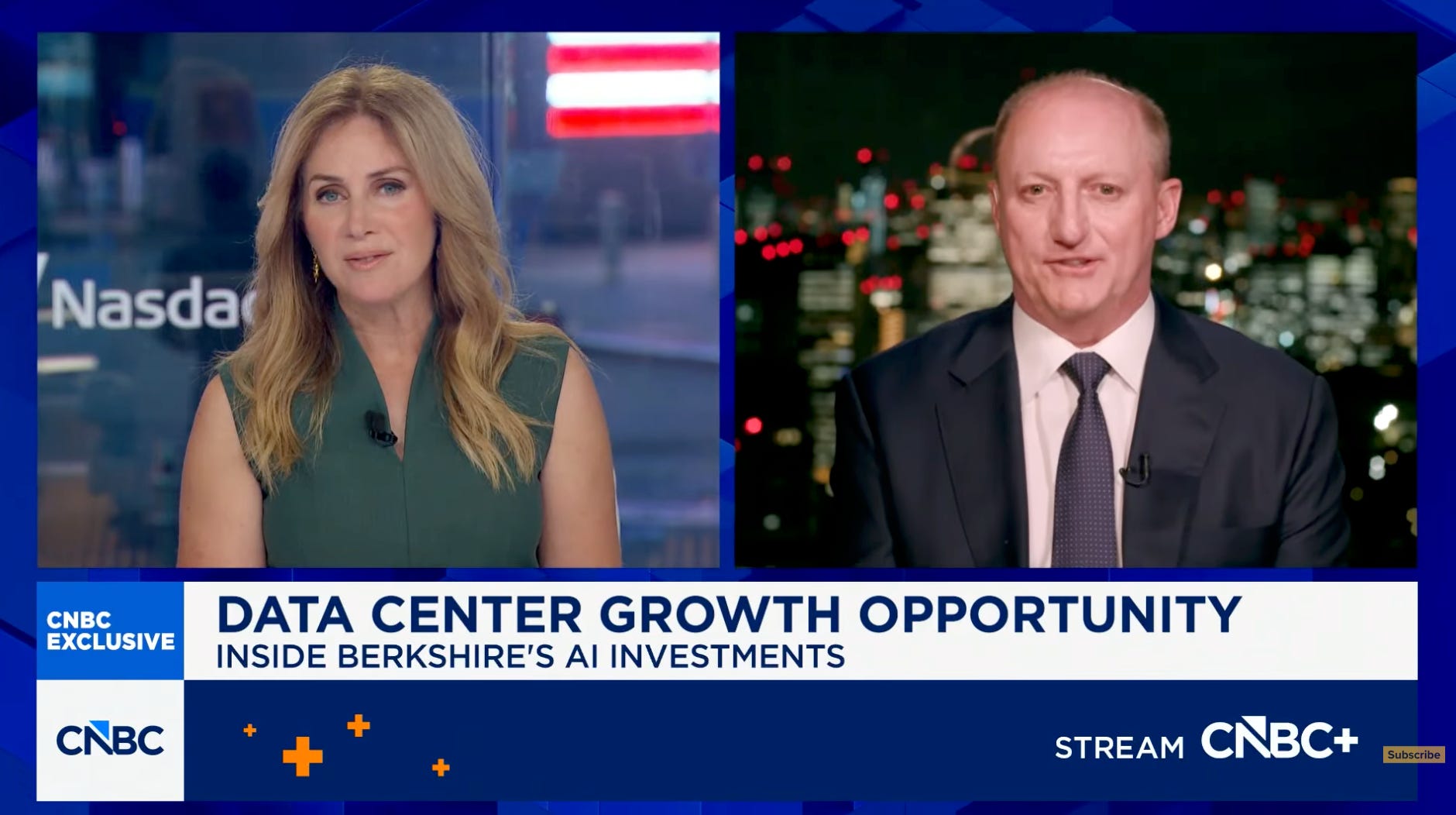
Abel confirmed that Buffett first pulled the trigger on Alphabet/Google shares “close to fifteen months ago”. That seems to point to purchases starting in July 2025, since the investment didn’t show up until Berkshire’s Q3 filing from that year, when the stock traded in the $180-190 range.
He also explained how the $10 billion private placement in June came about. Abel received a phone call on a Sunday morning a few months ago about participating in Alphabet’s AI-induced equity offering. He then dialed up Buffett and ran the offer by him — and they agreed to $10 billion at a 6.5% discount from then-current prices.
As for why Alphabet, Abel proved every bit as tight-lipped as his predecessor when asked about specific Berkshire stock holdings. But he did offer a high-level glimpse at how Berkshire thinks about artificial intelligence more broadly.
“We have a lot of visibility from within our companies as to how we’re using AI, what type of benefits it’s delivering, so that brought incremental interest [in AI],” he said. “We saw Google as a significant player.”
“There’s a lot more to Google than [that] and why we like it, but [that’s] why we took a serious look at Google and now have a significant investment in it.”
Berkshire Hathaway Energy will be happy to help power the AI data center boom, but strictly on its own terms. Abel called the surge in data center power demand “a significant opportunity” for BHE — but also laid out three non-negotiable conditions.
(1) Existing customers shall not be harmed with higher prices. “We’ve pretty much taken the approach that there has to be a net benefit to our customers,” he said.
(2) The community must understand the impact on water. “That has become much more manageable as [the hyperscalers] address that and use the technologies available to minimize water use.”
(3) The community must actually want the data center there. “We very much believe that you have to be a welcomed member of the community,” said Abel. “That’s a decision the data center has to make, but we can encourage them to seriously evaluate the reaction from the community.”
Much more from Abel’s interview will be coming your way early next week.
More news and notes from the Berkshire Hathaway orbit…
Berkshire Hathaway’s appetite for the Japanese trading houses has not abated. “Our goal is to continue to increase our ownership [of them],” Greg Abel told Nikkei Asia. “Next month, if I’m in Omaha and we’re watching things and we decide we’d like to have a little bit more of each company, we would do that.”
That comes as welcome news to Itochu CEO Masahiro Okafuji. “Because Berkshire is a stable shareholder,” he said, “we are not pressed for detailed explanations about our performance in the short term. That gives us peace of mind.”
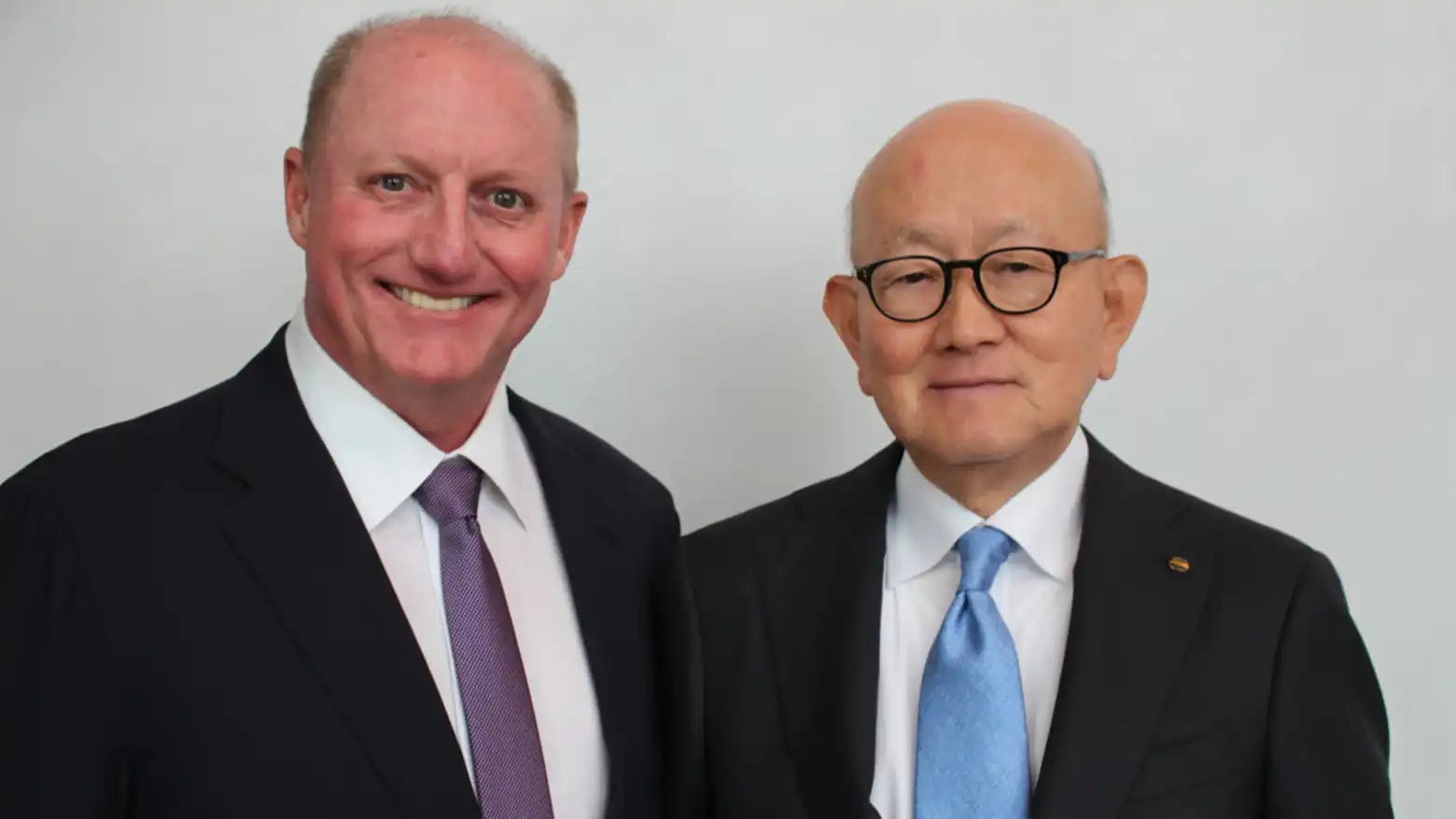
When Warren Buffett started buying the sogo shosha six years ago, he did more than just add a handful of new names to Berkshire’s portfolio. He conferred a stamp of approval on these companies that changed how the rest of the world saw them. “After the investment from Buffett, overseas investors became very interested in trading companies,” said Itochu president Keita Ishii. “Domestic investors also began buying [the] stocks, raising their valuation. Market perception became more positive.”
This week, Nikkei Asia checked in with executives at the trading houses about what — if anything — they’ve learned since being backed by Berkshire.
“Berkshire doesn’t look at things in the short term,” said Itochu’s Ishii. “For example, the U.S. real estate market is currently weak, but Berkshire is targeting it. It has a long-term perspective, believing that interest rates will eventually fall — and the next housing purchase cycle will inevitably arrive.”
Sumitomo CEO Shingo Ueno appreciates Berkshire’s trademark hands-off style. “I’ve spoken with their top leaders multiple times,” he said, “but they’ve never asked me to change anything. When I explain our strategy, they say we should keep doing what we’re doing. They understand Sumitomo’s strategy.”
“Warren Buffett often compares investing to baseball,” said Marubeni president Masayuki Omoto, “saying the good thing about investing is that you don’t have to swing the bat needlessly. You only need to hit the right pitches. We take inspiration from his emphasis on investments with a high batting average.”
Mitsubishi CEO Katsuya Nakanishi, meanwhile, took a cue from Buffett on the importance of communication. “I have placed greater emphasis on how we interact with shareholders and have increased dialogue with investors,” he said. “We’ll improve information disclosure and the clarity of our explanations.”
“We can call [Berkshire’s] leaders and talk to them when needed,” said Mitsui CEO Kenichi Hori, “and we’re very grateful for that. We’ve learned how important it is to have good access like that between top executives [of business partners], especially in a global context.”
Happy trails, Tim Cook. After fifteen years atop Apple, he stepped aside this week and handed the reins over to John Ternus. But, in classically Cook fashion, he cleared his successor’s plate of potentially controversial moves on his way out the door.
“Cook spent his final stretch as CEO taking on the unpopular decisions that John Ternus would probably rather not inherit on day one,” said CNBC’s MacKenzie Sigalos. “[He] announced layoffs that scale back parts of the Siri AI team and cut deeply into software engineering here in Silicon Valley — and, [also], raised prices across parts of its Services business, including Apple TV.”
“Cook isn’t really going anywhere,” added Sigalos. “As executive chairman, he can keep doing the messier work that he’s become especially good at — trade and supply chain diplomacy — while Ternus has the air cover to focus on products and become the face of what could be Apple’s biggest hardware cycle in over a decade.”
Chevron doubles down on Venezuela. The oil major will aim for roughly 600,000 barrels a day there within five years — up from 290,000 today — thanks to a $7 billion investment in two newly-assigned oilfields in the could-be-prolific Orinoco Belt.
Turning those fields into productive assets will take plenty of time and capital, but Chevron is happy to play the long game. It already operates multiple joint ventures with Venezuela’s state oil company PdVSA and remains the only major U.S. oiler active in the country. Exxon Mobil and ConocoPhillips, by contrast, are still fighting nearly two decades later for restitution on assets nationalized out from under them.
CEO Mike Wirth told CNBC that improving conditions in the South American nation have “taken this from not being very competitive within our set of alternatives to something that’s very competitive versus our options around the world — which is why we’re willing to commit significant capital and grow [there] the way we are”.
And, finally, please enjoy this video of Warren Buffett opening a fortune cookie. Sara Blakely, founder of Spanx, posted this on social media over the weekend in celebration of Buffett’s 96th birthday.
Dressed in what has quickly become his signature retirement look — purple V-neck sweater over white shirt — Buffett cracked open the cookie and received a pretty apt fortune: “Your happiness shines like the sun.”
“That’s very true,” he agreed.
Warren Buffett opening a fortune cookie 🥠 at 96 after dropping billions on Alphabet. Turns out the ultimate value investing signal is just a purple V-neck sweater and a lucky piece of paper 📜