
After the closing bell rings and the market goes quiet, one of the most celebrated investors in history grabs the remote, sinks into his recliner, and watches YouTube.
Warren Buffett, it turns out, is just like us.
Earlier this week, the Wall Street Journal offered a peek at the 96-year-old’s evening ritual — and his rather eclectic viewing habits. “Warren’s range is broad,” said close friend and bridge partner Sharon Osberg. “It can be the silliest things.”
Oh, like the Uzbek edition of America’s Got Talent, show tune recordings, railroad videos, and even Frank Sinatra performances from nearly a century ago. Buffett also watches clips from favorite movies, like Bill Murray’s Lost in Translation.
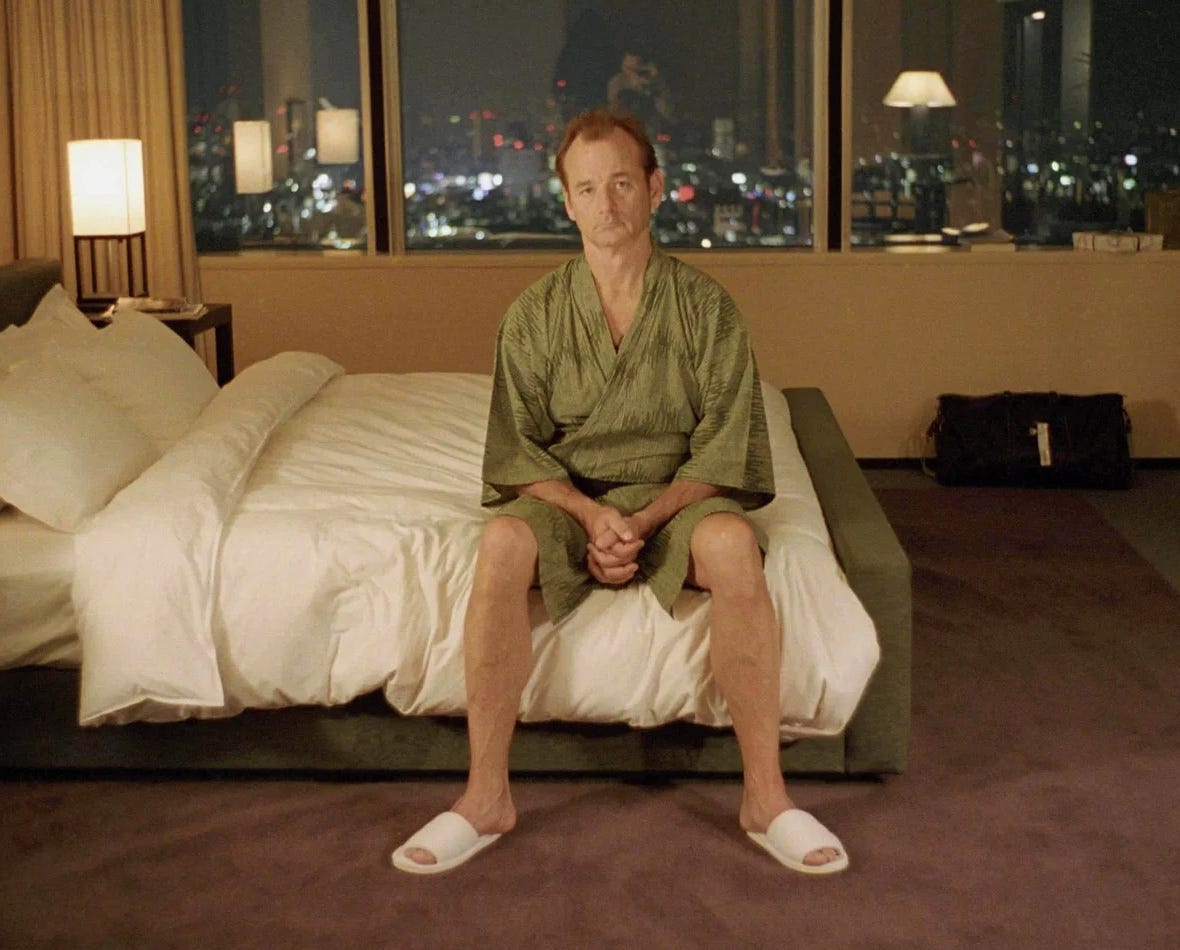
(Murray, of course, is a Berkshire shareholder who regularly attends annual meetings.)
Buffett doesn’t leave work entirely behind. He reportedly also enjoys watching Berkshire Hathaway content — and takes pride in how well those videos perform.
Does all this YouTube screen time explain Buffett’s decision to invest in parent company Alphabet? “Nah,” his friends say, “he just really likes watching the clips.”
Lately, Buffett has been binging videos of Charlie Munger speeches — revisiting his late partner’s wisdom one click at a time. This 2017 interview with University of Michigan alumni is specifically mentioned as one that he enjoyed. Which, I should mention, I annotated and transcribed for paid supporters a few years ago.
(Mr. Buffett: If you need a copy, just let me know!)
“You feel the bond between the two of them as he watches Charlie,” said Osberg. “It’s really quite something.”
So the next time you surface from a multi-hour spiral down a YouTube rabbit hole, don’t feel too bad. You’re in excellent company.
More news and notes from the Berkshire Hathaway orbit…
Berkshire can’t quit Lennar. Last week, the conglomerate scooped up another 2.4 million shares of the homebuilder for $192.6 million. Berkshire’s buying had cooled off in the final days of September, but it stepped back on the gas on October 1 and 2. All told, Berkshire now owns ~12.2% of Lennar across both classes of its stock.
Interestingly, there were no purchases on October 5 — even though the price of LEN 0.00%↑ dropped sharply that day.
A railroad executive’s guide to not getting hacked. BNSF Railway chief information security officer Alex Levy was recently named the inaugural TIME + Commvault CISO of the Year. With October being Cybersecurity Awareness Month, he blogged about the tips and tricks he gives to his own friends and family.
Use a password manager and NEVER reuse a password. “Password reuse is the single biggest self-inflicted wound in personal security,” said Levy. “One breach anywhere becomes a breach everywhere.”
Turn on multi-factor authentication and use a passkey whenever possible. This type of cryptographic key lets you log in with your face or fingerprint — and beats a password in every way that counts.
Fortify your email and phone number first. Think of them as the master keys to your online accounts — because just about everything can be reset through one or the other. “If someone owns your email, they can request password resets across your whole digital life,” said Levy. “If someone owns your phone number, they can intercept the reset codes.”
Adhering to these three basics will shut down most of the ways that ordinary people get burned. But I’d read the whole post and adopt as many of Levy’s recommendations as possible. It was quite an eye-opener for me.
I don’t know how Bloomberg gets these fly-on-the-wall scoops from inside Apple. This week, Mark Gurman delivers direct quotes from an internal speech John Ternus gave to employees about his decision to succeed Tim Cook as the company’s CEO.
The younger executive questioned whether he was up to the challenge. “I’m not you,” Ternus told Cook. “You do so many amazing things.” Cook, in his characteristically deadpan tone, replied: “I know you’re not me.” His point was that Ternus needed to be himself.
In recounting this story to employees, Ternus describes it as a turning point. What Cook said that “has really resonated and stuck with me” is that he spent his time as CEO where he added “the most value for Apple,” Ternus said. “And I need to spend my time where I can add the most value for Apple.”
For Ternus, that means hardware and design. He has already become a regular presence around the industrial design and human interface teams, echoing the way Steve Jobs lavished his attention on them during the Jony Ive era.
Cook worked miracles with the company’s supply chain and operations, but I think many Apple fans are ready for a renewed focus on products and innovation.
HomeServices of America acquired strategy and creative agency 1000WATT after its work on the real estate brokerage’s OnePoint brand platform. OnePoint allows the company’s many brands to present a unified suite of brokerage, mortgage, title, and insurance services to customers. (Delivering that kind of all-in-one experience has been a major focus for HomeServices under CEO Chris Kelly.)
The entire 1000WATT team will come over as part of the deal — with the agency’s co-founders also stepping into major roles at HomeServices. “This acquisition, along with all of the initiatives we’ve launched this year, marks a moment of massive opportunity to truly redefine the real estate experience and offer consumers a solution that balances skilled people with helpful technology,” said Kelly.
Business Wire celebrated its 65th anniversary last week. Founded by Lorry Lokey in 1961, the press release distribution service was bought by Berkshire twenty years ago. “For 65 years, our focus has been helping organizations communicate important business news accurately, reliably, and effectively,” said CEO Geff Scott. “The ways people discover and engage with information have changed dramatically, but the need for trusted news distribution has remained constant.”
As part of the announcement, Business Wire shared a few facts about the business that we don’t usually get from its very brief mentions in Berkshire earnings reports. Business Wire’s current client base includes 55% of Fortune 100 companies and half of both the S&P 500 and NYSE-listed companies.