
It’s nice to know that Berkshire Hathaway can still surprise us.
In an unexpected twist, we learned this week that someone at Berkshire (I’d love to know who) invested $330 million in Bending Spoons, the Milan-based serial acquirer of tech companies, digital apps, and ghosts of the internet past.
Berkshire gets 10 million ordinary shares of BSP 0.00%↑ as part of a private placement at $33 apiece — roughly 13% below the previous day’s close.
But that’s only part of the story.
The disclosure also revealed that Berkshire had quietly put $600 million into the company during its IPO in July. Add it all up and Berkshire has nearly $1 billion invested in and owns 4% of Bending Spoons.
“For decades now,” said CEO Luca Ferrari, “Berkshire Hathaway has been among the finest and most respected capital allocators in the world and is a longstanding inspiration for Bending Spoons.” When the news broke on Wednesday, the Bending Spoons stock price surged about 40%. A good, old-fashioned Berkshire bounce.
So what, exactly, is Bending Spoons? For those unfamiliar with the company, Bending Spoons hunts for established digital products that have fallen on hard times. It moves in, trims headcount (which might be putting it lightly), tightens operations, and leans hard into subscription monetization.
Bending Spoons might sound very private-equity-like, but it diverges from the playbook in a big way. Namely, it does not look to flip acquired businesses for a quick buck. The company says it has never sold a material business in more than a decade of existence. That’s an approach not unfamiliar to Berkshire.
The brand portfolio reads like a tour of internet nostalgia and everyday utility: AOL, Eventbrite, Evernote, Vimeo, WeTransfer, and many others. Subscriptions made up 93% of sales last year — and both revenue and operating profit continue to grow.
That said, organic sales growth was just 3% in the second quarter, meaning that its debt-fueled acquisitions continue to do the heavy lifting.
Who calls the shots? Bending Spoons uses a dual-class share structure. Ordinary shares, the kind Berkshire is buying, carry one vote a piece. Class A shares, though, get five votes — and all of them belong to the company’s four co-founders: Ferrari, Matteo Danieli, Francesco Patarnello, and Luca Querella. At the time of the IPO, the founders held roughly 83% of the overall voting power.
What about that name? Fans of The Matrix will get it. Ferrari and friends have said that the film’s famous “spoon bending” scene — in which Neo learned that limits are often just a matter of perception — inspired their company’s name. And for an outfit that tries to find value where the wider market sees only decay, the name fits.
Employees, naturally, are called “Spooners”.
More news and notes from the Berkshire Hathaway orbit…
When capital stampedes toward a handful of hot names, everything else gets left behind. That was the message from Li Lu, speaking last week at Columbia University. “If capital is overwhelmingly driven to the top,” he said, “that means the market can easily bifurcate, with a whole bunch of otherwise wonderful businesses trading at very low prices.” Today’s tech-heavy, AI-driven market is a bit like a party where all of the guests have packed themselves into one corner of the room — hanging out with the hyperscalers — leaving the rest of the house relatively empty.
For the patient investor, that emptiness is where the bargains can be found. Li Lu reminded his audience that “wealth, in the end, is really [your] percentage of ownership of global purchasing power”. As such, the key remains “buying great businesses in the most dynamic economies at advantageous prices and waiting long enough for the value to preserve and grow over time”.
BNSF Railway expects a quick decision on the latest lawsuit holding up its Barstow International Gateway project. Environmental groups (including the Sierra Club and the Natural Resources Defense Council) claim that the city of Barstow didn’t properly study how BIG would affect wildlife, plants, and the surrounding landscape.
BNSF’s Lena Kent tells Progressive Railroading that an expedited court review process has already been established. “We expect the matter to be heard this fall,” she said, “and a decision to be issued this year. In the meantime, BNSF continues advancing construction readiness activities and remains on track for a construction start at the end of 2026, subject to the court’s decision.” If it gets the green light, BIG could open for business as soon as 2028 or 2029.
In related news, BNSF was deemed “revenue adequate” in 2025. In layman’s terms, this means that the Berkshire-owned railroad achieved a return on investment better than the cost of capital for the industry as a whole. Last year, that benchmark was set at 9.79% and BNSF breezed through with a 10.91% mark. A welcome turnaround from 2024 when it was judged “inadequate” — but still well behind leader Union Pacific’s industry-leading 17.09% result and even CSX’s 11.4%.
Apple closed above a $5 trillion market cap for the first time on Wednesday. The tech giant had crossed that line several times before in intraday trading, but always slipped back before the bell. It now ranks as the second most valuable company in the world — trailing only Nvidia at $5.33 trillion.
On the sales front, Apple grabbed 22% of the global smartphone market in the third quarter (up from 18% a year ago), even as iPhone shipments slipped amid a broader slowdown. Counterpoint Research attributes the dip to the absence of a base iPhone 18 model, which is rumored to come next spring instead of this fall. It also added that both iPhone 18 Pro models launched stronger than their predecessors, particularly in India and China, while the uber-popular iPhone 17 family keeps rolling along.
Nikkei Asia, though, tells a more cautious story. It reports that Apple has trimmed production orders for the iPhone 18 Pro and Pro Max, with this month’s component orders down at least 15% from the original request. Sources point to rising memory chip costs, which pushed prices up and cooled consumer demand.
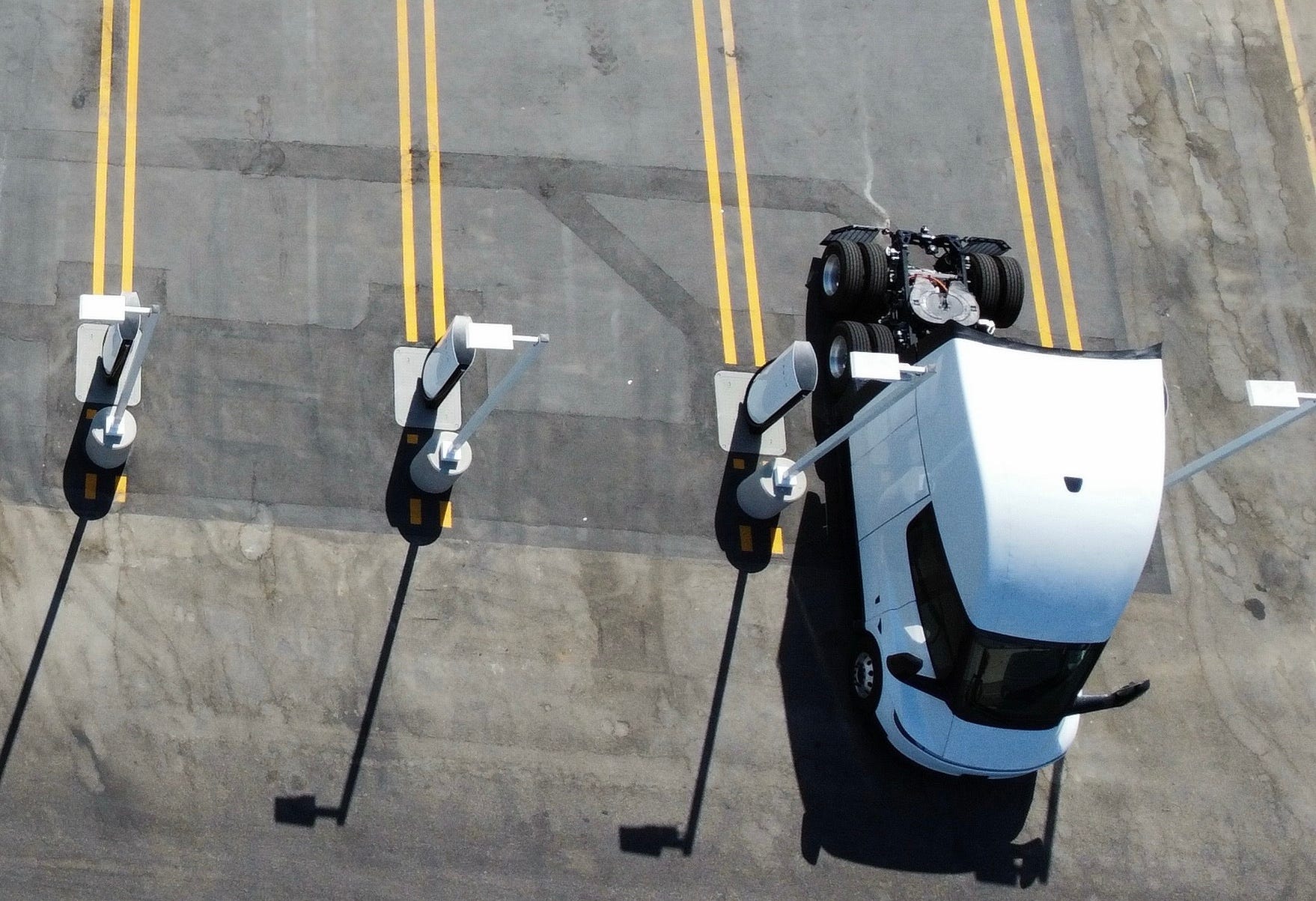
Pilot and Tesla opened their first Megacharger locations at travel centers in Ellabell, Georgia, and Tulare, California. A dozen more are currently under construction as the two companies build out a new network to keep electric trucks moving along America’s major freight corridors. Each site will host four to eight stalls using Tesla’s V4 cabinet technology, which delivers up to 1.2 megawatts, enough to charge a Tesla Semi to 60% in about 30 minutes.
“We’re making fleet electrification a more accessible option for long-haul transportation,” said Pilot senior vice president Shannon Sturgil, “and are excited to continue working with Tesla to move at the pace and preference of our customers.”
Coca-Cola may be about to try, once again, to sell Costa Coffee. According to Semafor, the beverage giant is weighing a fresh attempt to unload the British coffee chain after failing to drum up enough interest earlier this year. “At least one strategic acquirer mulled what a deal for Costa would look like,” sources told Semafor, “before passing due to valuation and strategic issues.”
Coke shelled out $5.1 billion for Costa back in 2018, but I don’t think anyone expects it to fetch anything close to that now. Especially after losing nearly £20 million across 2023 and 2024 combined. Costa recently reworked its menu around Gen Z faves like iced drinks and matcha. Time will tell if that’s enough to bring any buyers to the table.
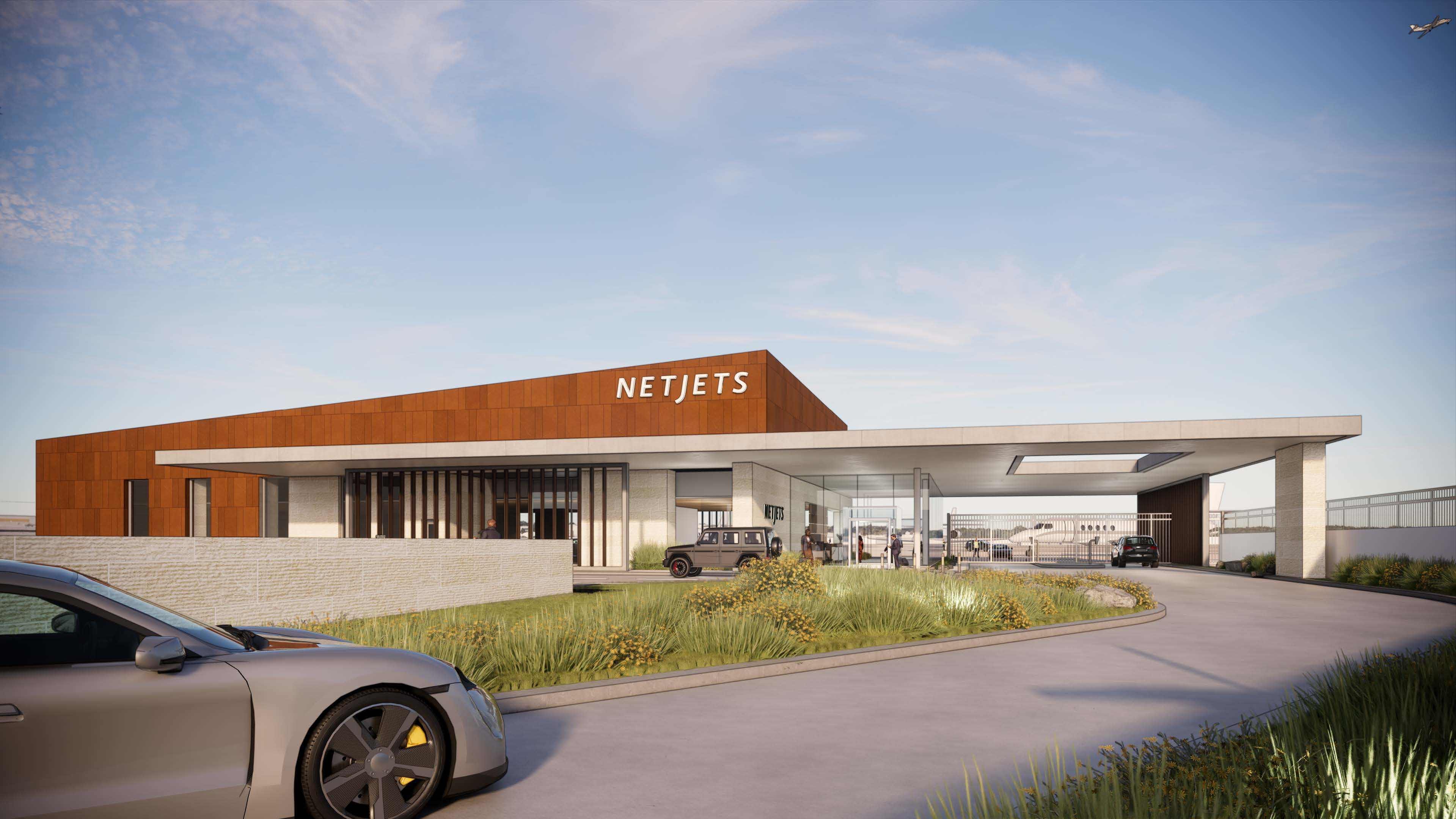
NetJets announced new exclusive-use terminals coming to Dallas Love Field, Washington Dulles, and Rifle Garfield County Airport in Colorado. These will offer more privacy, premium touches like VIP conference rooms and lounges, and on-site service reps to handle every last detail. “As owner demand continues to grow across key business, leisure, and seasonal destinations, NetJets is investing in the infrastructure to deliver an unmatched experience while supporting the service and reliability our owners expect where they fly the most,” said president Patrick Gallagher.
Alphabet plans to spend roughly $200 billion on capital expenditures in 2026 — with the vast majority going toward AI infrastructure — and president Ruth Porat says that number will “increase significantly” next year. “We do see this as an opportunity that extends for quite some time,” she told Fortune’s MPW summit.
Porat isn’t losing any sleep over whether all that concrete, silicon, and electricity will pay off. “It’s illogical to say that we’re in a capacity-constrained position because there’s such strong demand for [AI’s] insight and ability to improve business and government — and yet you can’t drive a return on it.”
The job, as she sees it, is delivering compute efficiently and in a way that creates real value for partners. And, for the time being, that means more and more cap-ex. “You must invest for long-term growth,” said Porat. “By the time you need it, it’s too late.”
Thanks for the update. Regarding "bending spoons", I know that italian listed investment company Tamburi has been a shareholder since 2019 and would probably make an outstanding ROI if it sold at current prices. In their latest presentation https://tipspa.it/wp-content/uploads/2026/09/Presentazione-TIP_30-settembre-2026-DEF-2.pdf there is a slide on BSP (slide 12).
Have an excellent weekend!