
A few more odds and ends from Greg Abel’s first CNBC interview as Berkshire Hathaway CEO…
✨ He still talks to Warren Buffett almost every day. “[Warren] is still in the office every day,” said Abel. “If I’m in Omaha, we’re always connecting. If I’m traveling like I was yesterday, I often check in just to catch up on what he’s seeing, what he’s hearing, [or] what am I feeling. So if it’s not every day, it’s every couple of days.”
✨ When Abel told Buffett about his plan to use his entire after-tax salary to purchase Berkshire stock each year, Buffett replied, “This is so Berkshire.” Abel hopes this will align his own situation with that of shareholders. “The whole idea is our shareholders, our owners, use their after-tax dollars to buy Berkshire. I will do the same.”
✨ Some have wondered how an operations-focused executive like Abel will handle Berkshire’s massive stock portfolio. But, said Abel, he loves tearing through stacks of filings and reports every bit as much as his predecessor. “I’m an operator, but I love businesses and I love reading. I’m going through K’s and Q’s. I’m looking at what are they saying about their businesses. I’m looking at the industries that we traditionally look at and, incrementally, to make sure [I] have a thorough understanding of the industries and what businesses stand out there.” And even if this research does not produce instant investment ideas, it does build out his mental filing cabinet that little bit more. “I view it [as] a lot of preparation,” said Abel, “waiting for when we see that value exists within a specific opportunity.”
✨ Crypto? Still a no. “I don’t think you’ll see crypto [at Berkshire],” said Abel. “I just don’t see it.”
✨ That said, tech stocks and/or acquisitions remain very much in play. “When it comes to technology,” said Abel, “from an operational perspective where we’re seeing how we use it, the impact it’s having, it does allow us to develop strong views and a better knowledge base around certain companies that are technology companies. Technology will always be on the table.”
✨ I loved this line from the interview. “There’s nothing better than Berkshire,” said Abel. “It’s what I do every day. I wake up thinking about Berkshire [and] I go to sleep thinking about Berkshire.”
Other news and notes from the Berkshire Hathaway orbit…
Morningstar senior analyst Greggory Warren, who has covered Berkshire Hathaway for fifteen years and served on the analyst panel at past annual meetings, discussed the conglomerate’s future on The Morning Filter podcast. And, in particular, how it will fare in this transitional period as Greg Abel takes over from Warren Buffett. “[Abel] is different than Buffett,” he said. “He’s an operations guy. And, at this point in Berkshire’s life cycle, they need an operations guy.”
“There are definitely places within the organization where I think they would benefit from having somebody who is more operations-focused helping to improve things. Greg has always been, in our view, a little bit more of an alpha personality, a little bit more driven. Buffett is less confrontational [with the subsidiaries].”
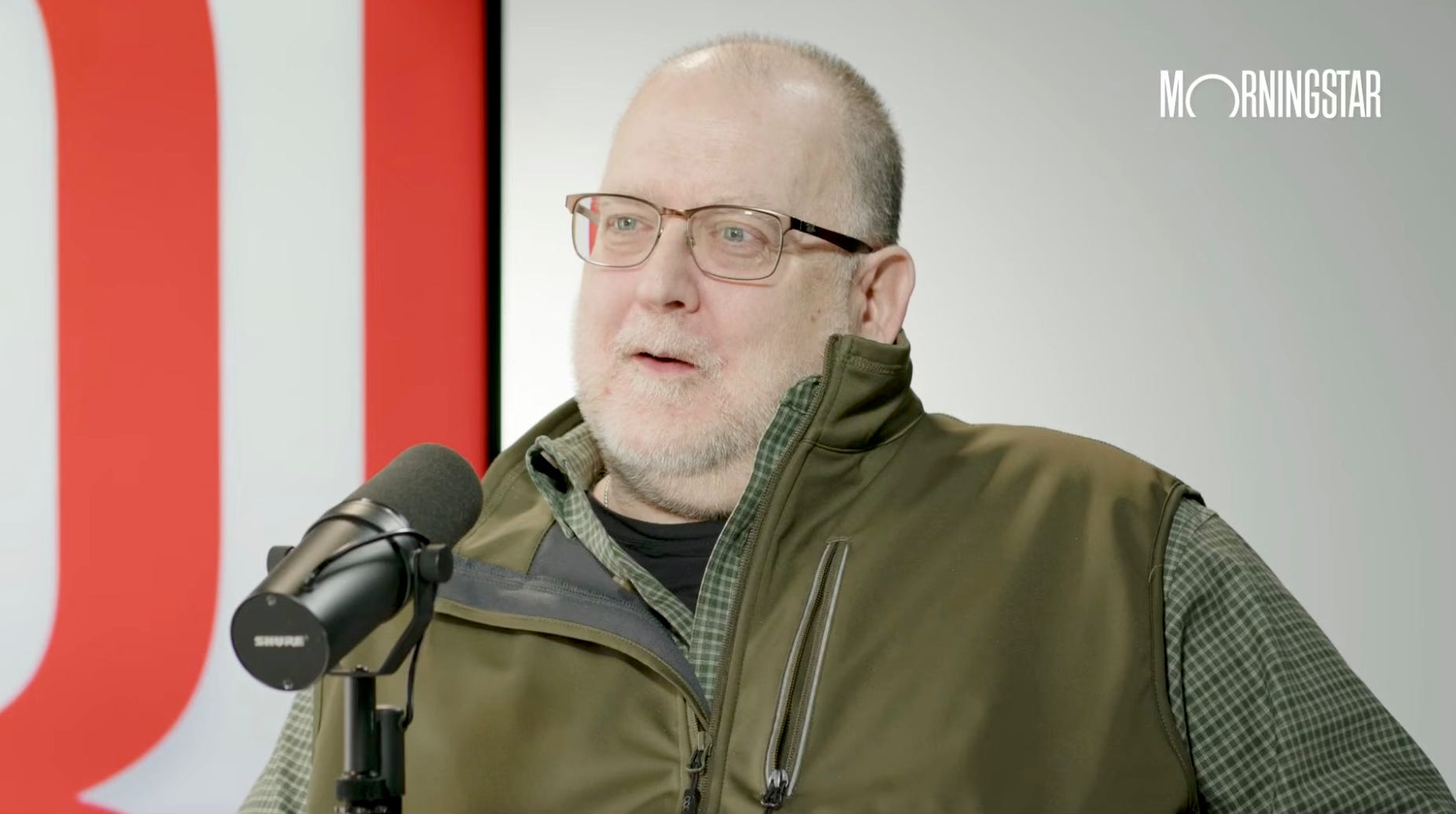
Warren also offered an interesting explanation for some of Berkshire’s recent stock sales. “Berkshire is subject to the 15% Corporate Alternative Minimum Tax,” he said, “and if they don’t pay an effective tax rate more than 15% in cash taxes over a three-year running period, they will be taxed on their unrealized gains. And, basically, what they’re doing is realizing gains to ensure that they get over that hump. That, in my opinion, is the main reason why we see them selling off Apple and Bank of America.”
And, finally, he paid homage to Todd Combs, who hopped over to JPMorgan Chase at year-end. “I thought he did a fantastic job at GEICO,” said Warren. “I don’t think he got enough credit from investors for what a monumental task he had to deal with.” Combs not only righted the good ship GEICO after years of poor underwriting decisions, but also ably steered it through the pandemic and its attendant chaos.
Whitney Tilson updated his estimates of Berkshire’s current intrinsic value: $801,000 for Class A shares and $534 for the Class B variety. “At this level,” he wrote, “I expect that Berkshire’s stock will slightly beat the S&P 500 over the next five years. So if the S&P 500 compounds at 5%, I would expect Berkshire to do roughly 6% — with a bias toward the upside due to new leadership under Abel.”
Based on Berkshire’s resumption of share repurchases, I would guess that Abel and co. see intrinsic value as quite a bit higher than Tilson’s estimates. Perhaps up around Christopher Bloomstran’s $855,396 (A) and $570 (B) numbers.
(That said, I commend anyone who puts their personal value estimates out for public consumption and criticism. It’s very “Man in the Arena” and all that.)
Apple made a splash last week by unveiling several new products — headlined by the $599 MacBook Neo. In an exclusive interview with Good Morning America, senior vice president John Ternus gushed about the laptop’s affordability. “We saw an opportunity here to really just reach a lot more people than we ever have before,” he said. “It’s solid. It’s reliable. It’s durable. It’s all the things you want a Mac to be.”

Ternus also leapt to the defense of Apple’s much-maligned AI efforts. “If we’re doing [AI] right,” he said, “people won’t even necessarily notice or think about it. They will just have a new feature that they start using more and more because they really like it.”
Citigroup CEO Jane Fraser shared two memorable pieces of advice that she learned from Buffett with students at Stanford Graduate School of Business. The first — which actually comes from Tom Murphy by way of Buffett — is a simple reminder to keep your cool in heated moments: “You can always call them an ***-hole tomorrow.” That means, she said, never responding to an email (or any message) in anger. The second is Buffett’s famous maxim to praise by name and criticize by category. “You’re always going to regret it if you criticize someone by name,” she warned. “It’s going to come back and bite you.”
Barron’s estimates that new acquisition OxyChem has already gained 30% since the deal closed at the start of the year. In dollars and cents, that comes out to more than $3 billion to the good. The surge stems from favorable industry conditions: “U.S.-oriented chemicals companies are benefiting from advantaged pricing on feedstocks like natural gas amid international energy dislocations caused by the Mideast conflict.”
The deal had already won praise in some quarters for coming at a valuation tied to what’s thought to be trough earnings — with Berkshire essentially buying OxyChem at a depressed multiple during a cyclical low in the petrochemical sector.
HomeServices of America CEO Chris Kelly told Real Estate News about his vision to mold the Berkshire-owned brokerage into a more unified whole. “Ideally,” he said, “what we want HomeServices to be is the professional adults in the room. It’s really important that HomeServices steps up and fulfills its obligation as one of the top three brokerages in the country.” To achieve this, Kelly is shifting the organization from a holding company mindset — where oversight was minimal — to more of a true (and involved) parent company. Previously, the hands-off approach to acquisitions and integration led to fragmentation and confusion. “Unfortunately,” said Kelly, “what happens is you end up having 40 different ways of doing everything.”
Berkshire also collected a few quarterly dividends this week: $231.7 million from Chevron, $25.4 million from Moody’s, and $1.7 million from Louisiana-Pacific.
It seems a little implausible to me that Berkshire would sell securities to avoid paying taxes on unrealized gains since they would still be paying taxes by realizing gains. I think Buffett would rather use other available cash rather than sell securities he thinks have good long term potential to raise cash to pay taxes. This motivation could exist for many companies lacking cash but seems implausible at Berkshire. Maybe someone will ask Greg about this at the annual meeting.
Curious: if Greg is an operations guy, what would Warren be