
(1) First, before we get to Berkshire Hathaway’s recent shopping spree, I want to start with some words of wisdom from Warren Buffett himself. Christopher Letts, who now leads The Pine Harbor Group, wrote about his 2006 college trip to meet with Buffett — and how he came home with two pieces of advice that changed his life.
“Everyone talks about my financial success,” said Buffett. “But the thing I’m most proud of? The culture I’ve created at Berkshire. That culture has created all of my wealth. It’s the single biggest reason for Berkshire’s success. When I go to acquire a business, all I have to do is talk to the owner. They know how we operate. They know our values. We shake hands. The deal is done. No attorneys. No investment bankers fighting over terms. Just trust. Our culture is everything.”
When Letts mentioned he planned to go into wealth management, Buffett said: “Never, ever have clients. You may call them that, but in your mind, they must be partners. Set it up so if they win, you win — in that order. If you do that, you’ll be successful forever.”
(2) Greg Abel has been busy. Over the weekend, Berkshire Hathaway announced the acquisition of Taylor Morrison — one of America’s leading homebuilders — in an all-cash deal worth $8.5 billion. Berkshire will pay $72.50 per share, representing a 24% premium to the stock’s previous closing price, for a total of $6.8 billion in equity value (plus the assumption of existing debt).
“Berkshire is acquiring a best-in-class national homebuilder,” said Abel, “led by an exceptional team and backed by a trusted reputation for customer experience.”
Taylor Morrison operates across twelve states and generates 95% of its annual revenue from home closings. It landed on Fortune’s Most Admired Companies list this year and has reigned as America’s Most Trusted Builder for more than a decade. And, true to Berkshire form, the existing management team — led by CEO Sheryl Palmer — will stay in place after the transaction closes.
“Greg did [this deal] faster than I could have done it, smoother than I could have done it, and I never [even] talked to the CEO,” Warren Buffett told Becky Quick afterwards. “He has launched.”
Looking further ahead, Abel outlined an ambitious vision: “Over time, we expect to unify our site-built homebuilding operations into a combined platform enabling us to deliver the dream of homeownership to more Americans.”
(3) Taylor Morrison CEO Sheryl Palmer could not hide her excitement at the prospect of joining the Berkshire family. “[This] is a once-in-a-lifetime opportunity for the company, for the brand, and our team members across the country,” she said.
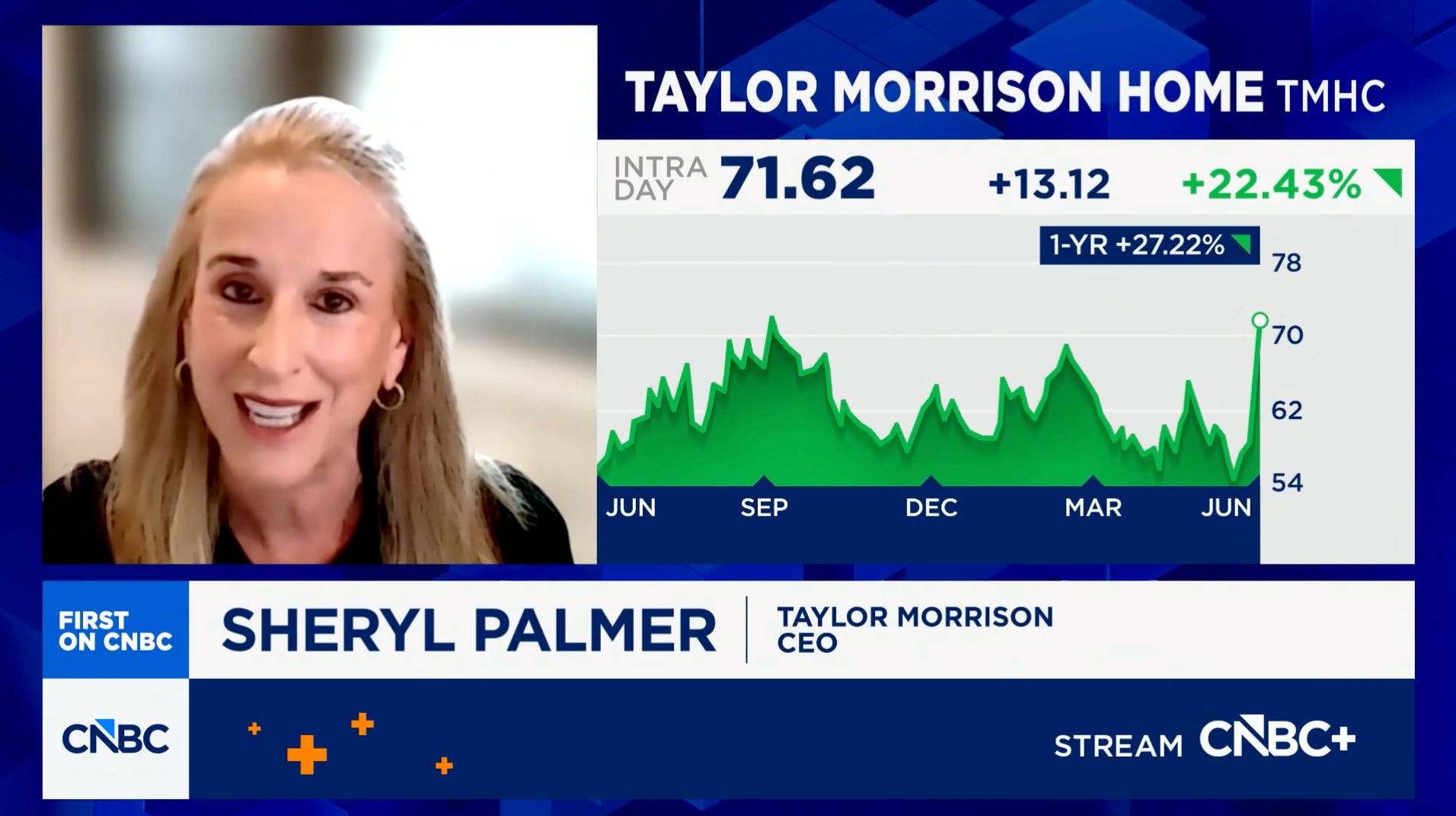
“It allows us to focus on the long game,” added Palmer. “If you think about the cycles of our industry, acquiring land at the right time and the right price, investing through cycle downturns maybe when others pull back, building communities that take years and years to develop — this is exactly the patient capital advantage that Berkshire provides to the companies they own.”
In other words, Taylor Morrison does not just gain a deep-pocketed parent — but the freedom to build its business without the quarterly pressure of a public company.
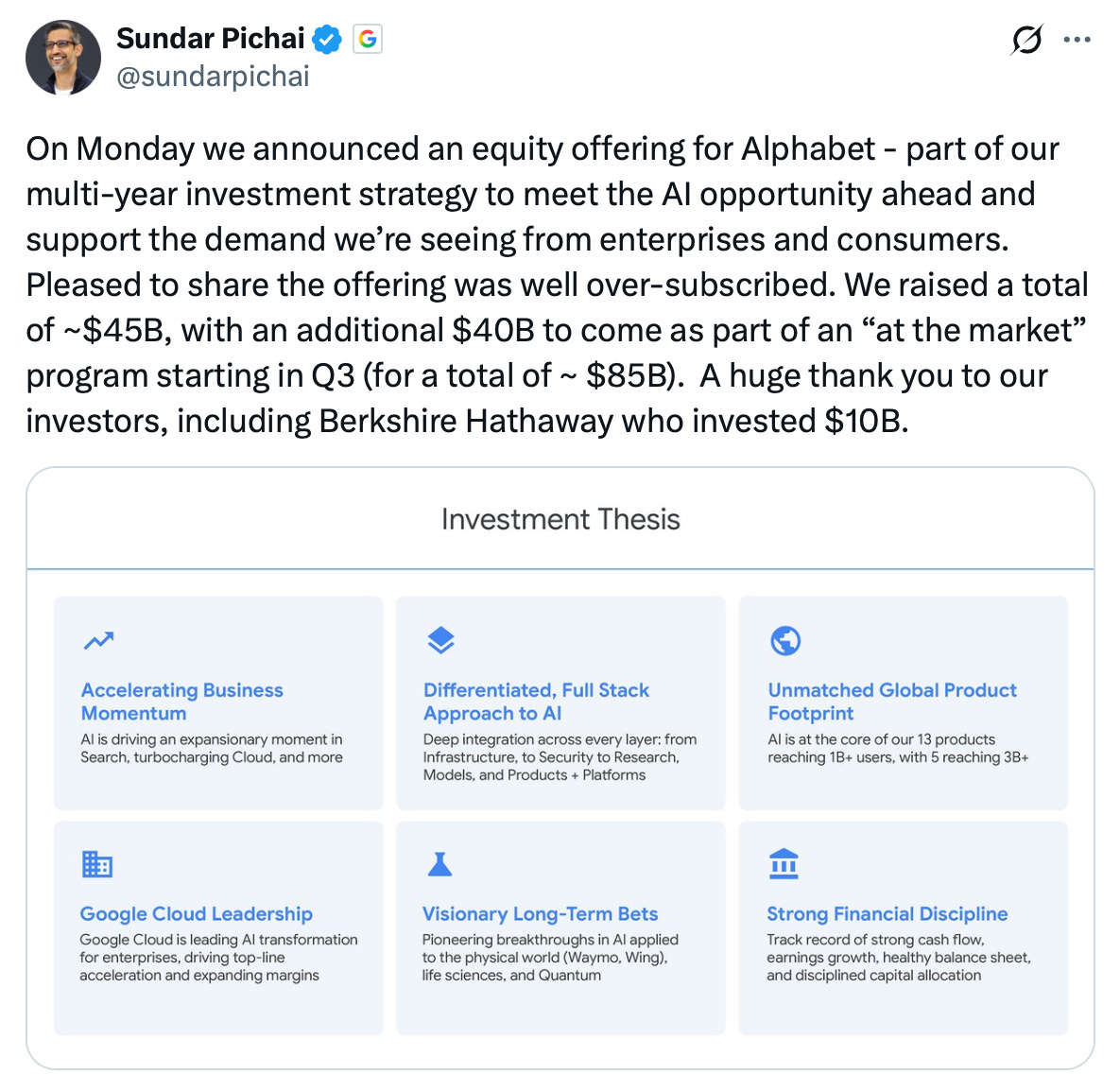
(4) While the Taylor Morrison ink was still drying, Abel turned his attention to Alphabet. Berkshire deepened its investment in the tech giant with a $10 billion private stock purchase — split evenly between Alphabet’s Class A shares (bought at $351.81 a piece) and Class C shares ($348.20). This move is part of a broader $85 billion stock offering from The Company Formerly Known As Google, to fund what it calls “world-class AI compute infrastructure” for surging customer demand.
(There has been some confusion about the Class C “capital” stock that Berkshire purchased. That’s just Alphabet’s official designation for its GOOG 0.00%↑ non-voting shares, not a special kind of preferred issue or anything of that sort.)
The deal came together quickly. Goldman Sachs called Abel over the weekend to bring Berkshire into the picture — and it was sealed the next day when Abel spoke directly to Alphabet CEO Sundar Pichai. He received a six-plus percent discount on these shares at the time of announcement, though that has partially dissipated amid fluctuations in Alphabet’s stock price this week.
(5) Why does Alphabet need the money? Well, for starters, its current-year capital expenditure forecast recently rose to $180-190 billion as it aggressively builds data centers and locks in the compute capacity needed to train and run next-generation Gemini AI models. And Google has already signaled that cap-ex will “significantly increase” again next year.
Berkshire opened its Alphabet position less than a year ago, but has quickly turned it into a cornerstone of the massive equity portfolio. When combining the GOOGL 0.00%↑ and GOOG 0.00%↑ shares owned by the conglomerate, Alphabet is already nipping at Coca-Cola’s heels for a top-three spot.
(6) When Ajit Jain eventually steps back from leading Berkshire’s insurance empire, General Re chairman Charlie Shamieh will reportedly take his place. Shamieh is not a household name — not even in Berkshire circles — and seems to prefer it that way. He keeps a very low profile, though his recent interview for the anniversary edition of The Warren Buffett CEO is a notable (and welcome) exception.
I did manage to dig up a couple other Shamieh talks of recent vintage. In 2021, as Gen Re celebrated its centennial, he reflected on the company’s history and underwriting philosophy. And what emerged was a portrait of someone who thinks about insurance the same way Warren Buffett does investing — in decades, not quarters.
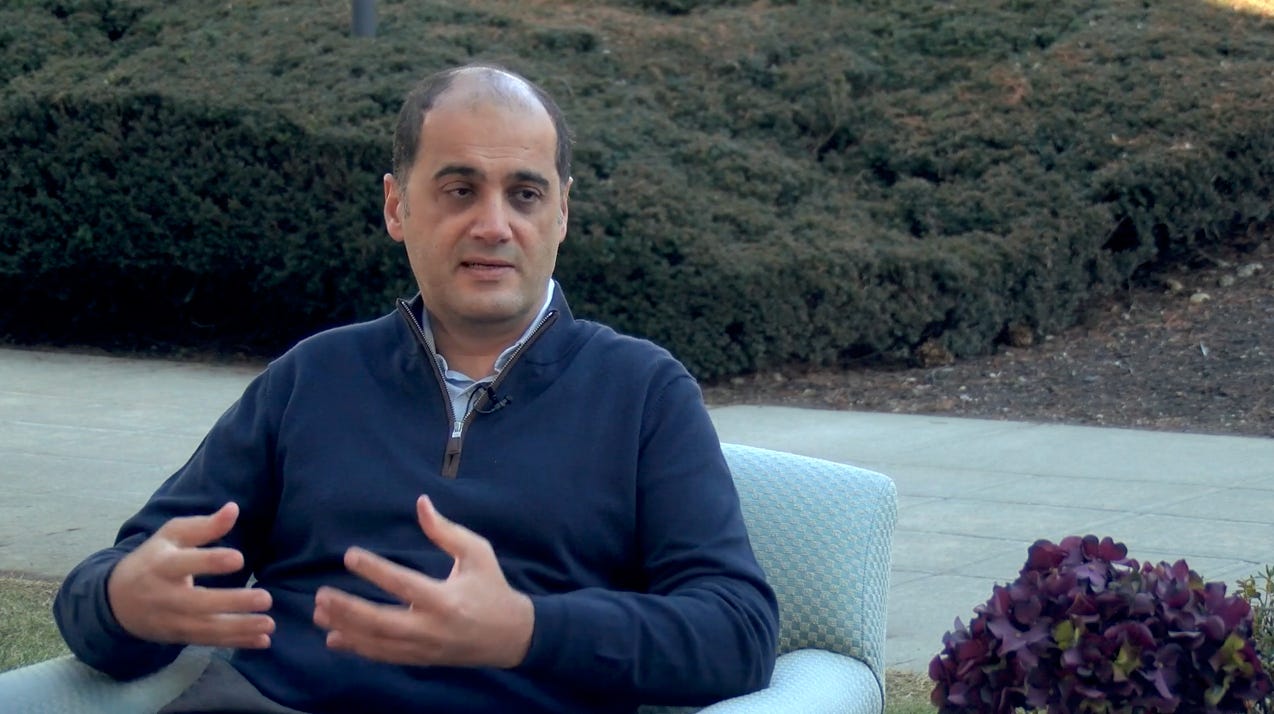
“The key thing that is still here and hasn’t really been tainted by any of the various ebbs and flows of our history is the underwriting integrity and the willingness to do what’s in the long-term best interests of the client,” said Shamieh. “Those words — long term — often are missing from many other reinsurers in the industry today.”
That attitude starts at the very top. “The unique thing,” he said, “is our shareholder (Berkshire Hathaway) does not measure our value using traditional insurance and reinsurance industry metrics of return on equity. Rather, it’s looking at the solidity of our long-term underwriting profits — and that’s really unique.”
This affords Gen Re — and Berkshire’s other insurers — the freedom to say no.
No to mispriced risk. No to volume written at the expense of quality. No to the aggressive business that peers chase when the market softens.
That kind of institutional patience is rare in the insurance industry. In Shamieh, it sounds like Berkshire has found someone who recognizes this mindset as a precious differentiator — and intends to protect and nurture it for years to come.
(7) In another interview, Shamieh made the case for an insurance industry that doesn’t just price risk and write checks — but actively works to reduce said risk in the first place. He pointed to the Insurance Institute for Business and Home Safety, a U.S.-based nonprofit funded collectively by global reinsurers and domestic insurers as a prime example. “We’re not just talking about sustainability,” Shamieh told Insurance Europe, “but we’re actually investing in sustainability.”
“The team of engineers and scientists at the IBHS does an excellent job of trying to educate us on the resilience of building materials and then putting pressure back on the manufacturers to improve the resilience of those materials and on building codes in local communities to ensure that those societies are more sustainable.”
The IBHS operates large-scale physical testing facilities where materials and structures are subjected to simulated hurricanes, hailstorms, wildfires, and other catastrophic perils — to better understand how and why they fail. More resilient buildings mean smaller losses, less frequent claims, and a more stable underwriting environment for everyone. A win for insurers and policyholders alike.
(8) According to the IDC market intelligence firm, Apple shipped 1.1 million MacBook Neo units last quarter. A remarkable figure in its own right, but made all the more impressive by the fact that it was only on sale for around three weeks of that period. IDC also noted that shipments spiked sharply in early April, suggesting the next earnings report could deliver an even bigger headline number for the Neo.
In response to this “off the charts” demand (as CEO Tim Cook put it) for the MacBook Neo, Apple has reportedly doubled its planned shipments — to 10 million — for the full year.
What makes this product so significant is not just these sales figures — though I’m sure they are much appreciated in Cupertino — but what it represents strategically. By pairing the premium look and feel of its flagship MacBook lineup with the price savings of “binned” iPhone chips, Apple has engineered a laptop it can sell for as low as $499. For the first time, a whole swath of customers who were previously priced out of the MacBook ecosystem have an attractive on-ramp — and they are taking it.
(9) A confluence of forces is pushing freight off the highway and onto the rails. Higher fuel prices continue to squeeze trucking economics, while tightening federal enforcement of truck driver registrations constrain over-the-road capacity. “Shippers are changing modes when they can,” a TD Cowen transport analyst told Trains, with intermodal rail emerging as the early winner. “Volume is going to increase through the second quarter,” the analyst predicted.
And, happily, BNSF Railway is leading the charge. The Berkshire-owned railroad posted 9.9% intermodal traffic growth over the past four weeks, outpacing the rest of the industry, and raising the possibility that U.S. roads could challenge the all-time record of 14.47 million intermodal shipments set back in 2018.
BNSF vice president Jon Gabriel sees this influx of diverted freight as a chance for his railroad — and the entire industry — to make real inroads against trucking rivals. “The biggest prize of all is conversion from truckload,” he said. “We want to be that base load capacity, not the flex capacity, for supply chains across the country.”
(10) The New York Times Dealbook newsletter reports that Sirius XM and iHeartMedia were unable to reach an agreement on a potential merger. The deal would have combined two of the most recognizable names in audio entertainment at a moment when both face mounting pressure from streaming platforms. Dealbook adds that discussions, while currently stalled, could be revived in the future.
I agree with Buffett: never call them "clients" and a company's culture is everything!
$goog was about $150 in April ‘25. Considering the greatly reduced free cash flow, Berkshire buying it @ $350 is the last straw for me. I plan to gradually wind down my Berkshire position.