
This month’s annotated transcript — featuring none other than Berkshire Hathaway CEO Greg Abel in a pre-AGM interview with CNBC — will go out to paid supporters on Monday. So, if you’ve been on the fence about upgrading, this might just be the perfect time.
As we head into the dog days of summer, if you’re anything like me, you’re always on the hunt for something new to read. The latest addition to my bookshelf is the new 25th anniversary edition of The Warren Buffett CEO by Robert Miles, which came out a few days before Berkshire Hathaway’s annual shareholders meeting.
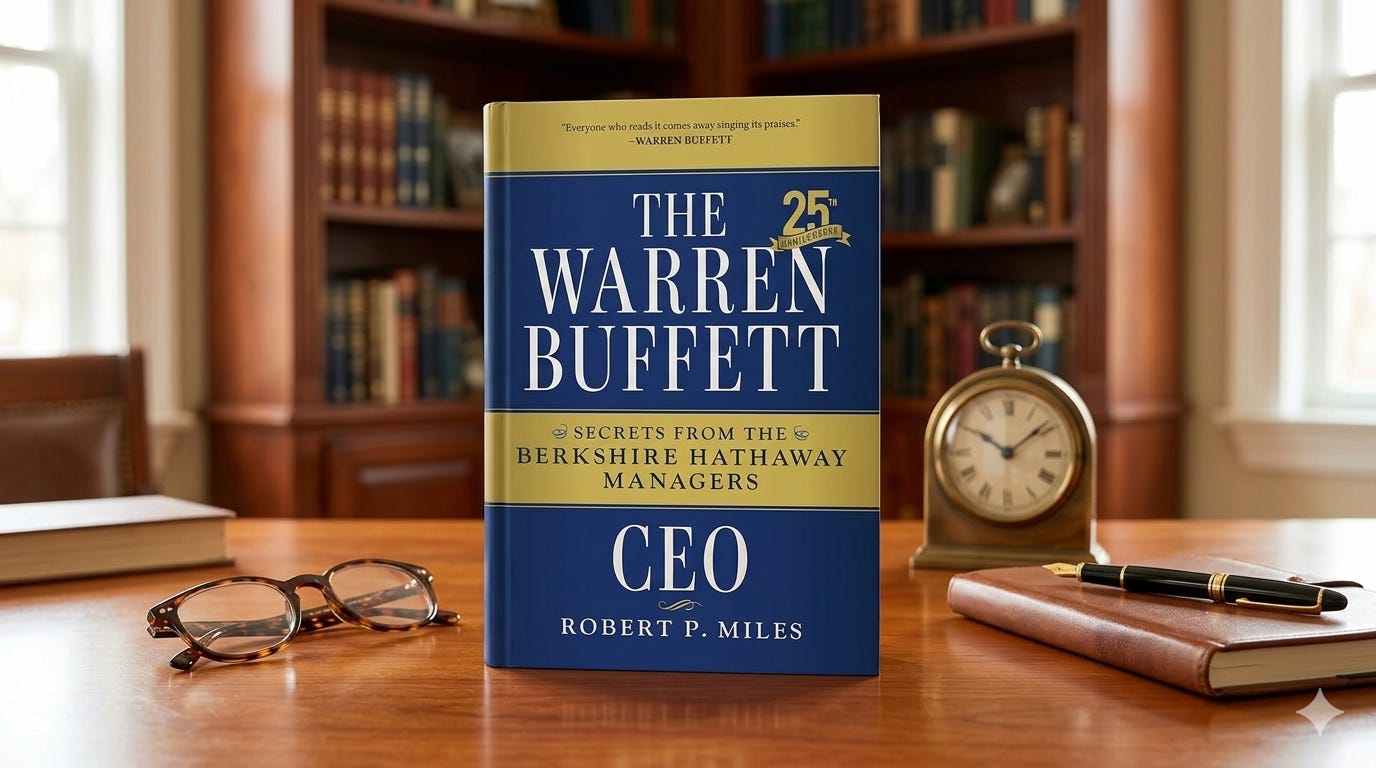
I caught up with Miles to learn more about the new edition — and how Berkshire has managed to find (and keep) some of the best leaders in the business.
Can you run through the new material added to this 25th anniversary edition?
All of the original chapters profiling twenty CEOs have been updated with a review of each subsidiary’s results, as well as management changes.
The majority have retired or passed away — with three continuing into the next quarter century: Ajit Jain [was] promoted to vice chairman of insurance and Irv Blumkin [was] promoted to chairman of Nebraska Furniture Mart and his brother Ron [was] promoted to vice chairman.
The Warren Buffett CEO — 25th Anniversary Edition includes, for the first time, a chapter and profile on Warren Buffett’s successor, Greg Abel. His chapter illustrates the change from Buffett “the teacher” to Abel “the coach”.
For the first time, Charlie Shamieh — the likely successor to Ajit Jain — is profiled with a very remarkable life story.
New chapters also include the recently resigned GEICO CEO Todd Combs; Ted Weschler, Berkshire’s investment manager responsible for managing a $20 billion equity portfolio and the point man for Berkshire’s Apple investment; Don Wurster, president of National Indemnity, the world’s largest insurance company; Kevin Clayton, family manager of Clayton Homes, America’s largest home builder; and Katie Farmer, CEO of BNSF (and the first woman CEO of any railroad in the world).
Each chapter illustrates the Berkshire ethos of trust, independence, and management excellence as Berkshire became the largest and most successful conglomerate and business exemplar.
The original edition examined the unusual level of autonomy that Buffett allowed his managers. How has that model held up over the past 25 years? And how do you think it will evolve under Greg Abel?
Each major earnings contributor is likely to grow under Abel’s leadership as the conglomerate shifts from Buffett “the teacher” to Abel “the coach”.
Macro-management is so entrenched that any attempt to micro-manage or change the deeply-rooted culture would result in mass resignations. Most long-term Berkshire managers are no longer working for money, but because they enjoy what they’re doing.
As the baton passes from Warren to Greg, the successor set new precedents: (1) he committed 100% of his after-tax salary to buying Berkshire shares on the open market each year that he is CEO, and (2) he committed to running Berkshire for twenty years. These two pledges are unparalleled in the for-profit corporate world and speak loud and clear to Berkshire’s sustainable culture and management continuation.
After studying Berkshire for so long, is there anything about Buffett’s management philosophy that is still misunderstood or under-appreciated?
When I asked Warren what he is most proud of, he said — without hesitation — “Never having lost a subsidiary CEO to a competitor.” And when I asked him how he would measure his successor, he said, if [the successor] too could say, “I never lost a subsidiary CEO to a competitor.”
Twenty-five years later, the record is still intact — and I suspect that, over the next twenty years under Abel’s coaching, the record will continue to stand and Berkshire will continue to be a model of attracting and keeping talented managers.
More news and notes from the Berkshire Hathaway orbit…
It’s just about that time again — when Warren Buffett announces his mid-year charitable donations to a handful of family foundations and, at least historically, the Gates Foundation. This year, though, Gates might be out of luck. Buffett publicly hedged on whether that foundation would remain a recipient of his largesse — telling CNBC’s Becky Quick in March that he hadn’t made a final decision on that yet.
In the meantime, Buffett has not gone totally silent. For Time’s recent profile of NBA superstar LeBron James — named one of the 100 Most Influential People in Sports — he offered a simple verdict on his friend’s business acumen. “The guy is smart,” said Buffett. “He’s a smart guy on the court [and] he’s a smart guy off the court.”
TerraLithium, an Occidental Petroleum subsidiary, and BHE Renewables just reached two technical milestones that could move their direct lithium extraction project from promising experiment to commercial reality. The joint venture — formed in 2024 — reportedly demonstrated the ability to pull lithium chloride from geothermal brine, convert it into lithium hydroxide using a commercial-scale electrolyzer, and produce battery-grade lithium carbonate. (Please don’t ask me to explain any of that.) But, in layman’s terms, these compounds are integral in the production of lithium-ion batteries for electric vehicles, cell phones, and more.
Tim Cook said price increases were on the way — and, yesterday, they arrived. Apple hiked prices across many product lines, including all iPads and Macs, though popular items like iPhone, Apple Watch, and AirPods were left untouched (for now). “We have never seen a component price increase this much, this quickly,” the company said in a statement. “We have shielded our customers from these increases so far, but we have now reached a point where we need to begin raising prices on a number of products. We know this is not welcome news and we are working tirelessly to find solutions.”
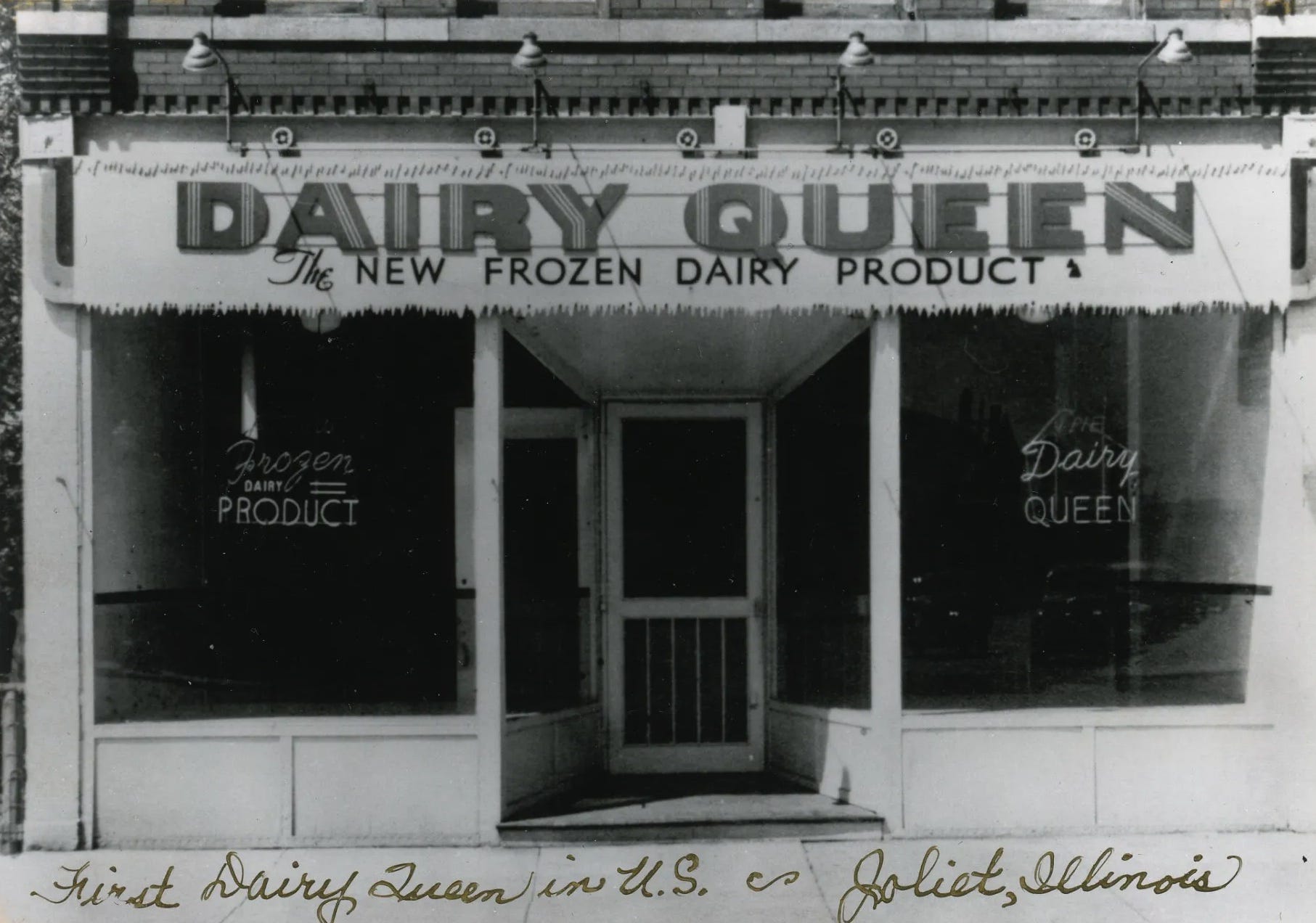
The world’s first Dairy Queen — located in Joliet, Illinois — will soon be reborn. Not as a working restaurant, but as a full-blown Route 66 landmark to coincide with the famous highway’s 100th anniversary. “It seems appropriate that International Dairy Queen also shares its story with another American icon — the original alignment of Route 66, one of the most recognizable roads in the world,” said the museum’s CEO. For road-trippers chasing the Mother Road this centennial year, this should be one more reason to pull over in Joliet.
In a Fox Business interview this week, Delta CEO Ed Bastian touted the progress his airline has made in recent years — including the return of a certain shareholder. “We’ve got all of our investment-grade ratings back from all three agencies,” he said, “which I’m proud of. We continue to pay down debt even further. [And] we just had a great validation that Berkshire came back into our stock. They are one of our largest shareholders right now, which is great to see.”
As part of a global restructuring, Kraft Heinz will consolidate its operations into three regions — North America, Europe & Pacific Developed Markets, and Emerging Markets — to more effectively deploy resources. “We are building momentum across many areas of the business,” said CEO Steve Cahillane, “and this regional structure will help us meaningfully accelerate and scale our progress.”
Mark Tobak over at Hedge Fund Alpha uses the words of Charlie Munger, Benjamin Franklin, and Lee Kuan Yew (among others) to make the case that societal wealth disparities can be better solved via personal financial discipline than public policy. Almost anyone can build wealth by saving a modest percentage of earnings and letting compound interest do the rest over multiple decades. Consistency and time matter much more than the size of your paycheck.
Chevron agreed to power Microsoft’s new data center in Texas via natural gas for the next twenty years. The project will deliver roughly 2.67 gigawatts of capacity — with most of that power coming from large gas turbines supplied by GE Vernova. Critically, the facility will be entirely dedicated to the data center and will not connect to the local grid at all, which should mitigate any impact on consumers in the region.
Buffett's proudest statistic isn't returns, it's never losing a subsidiary CEO to a competitor. That's culture compounded over decades. Hard to measure, impossible to replicate.
On the Berkshire Beat: the cash pile is the real story for me. It reads as discipline, not bearishness. Buffett would rather earn on treasuries than overpay for mediocre businesses. In this market, patience is itself a position worth respecting.