
Coming next week for paid supporters: A transcript of a Peter Lynch interview from one of the most turbulent moments in modern financial history. The dot-com bubble had just finished its spectacular collapse — erasing trillions in paper wealth — and the terrorist attacks on 9/11 left the broader investment community paralyzed by fear. Lynch, characteristically, had plenty to say — about staying optimistic in trying times and the timeless investment principles that will cut through the noise of any era. Upgrade now so you don’t miss out!
(1) The caricature of Charlie Munger made for great copy. An irascible curmudgeon. A blunt contrarian who suffered fools with barely concealed contempt. But those who knew the man best offer a far more nuanced portrait of his greatness.
Berkshire Hathaway director Christopher Davis shared some of these memories this week on the Masters in Business podcast, drawing on years of close observation. “Most deeply, I learned about integrity in the traditional sense, meaning wholeness,” he said. “Charlie was a whole person. The alignment [of] what he thought, what he said, what he did — they were all the same thing.”
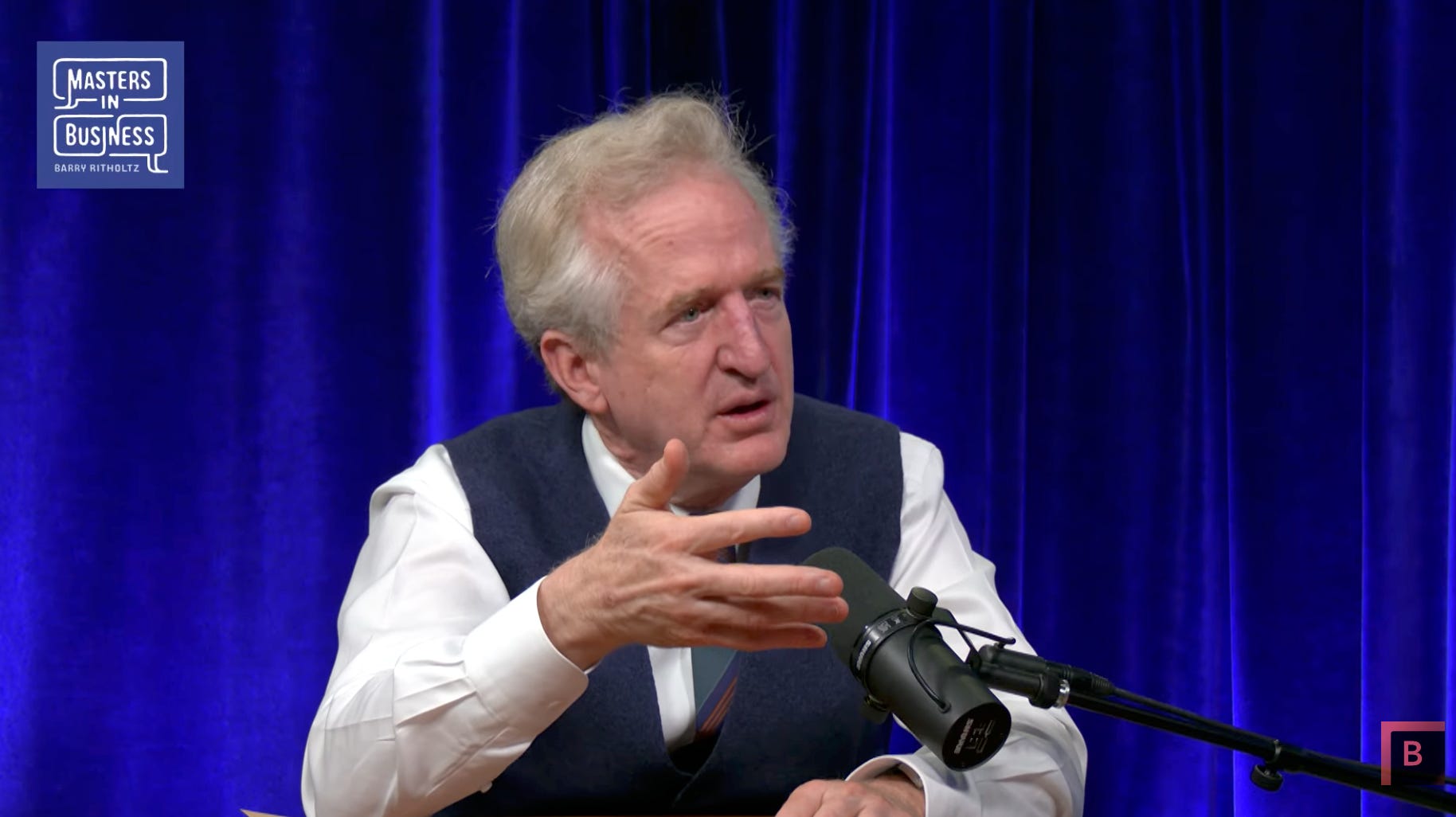
The curmudgeon act, Davis suspects, was armor. Social camouflage of sorts that kept the unserious at bay, but was easily shed among friends.
“I never saw it,” he said. “He was a truth-speaker — but he was also, in a very profound way, a very loving person. Very cheerful. Very committed. Profoundly loyal.”
(2) Apple held its annual Worldwide Developers Conference earlier this week — and did so with much to prove. When Apple unveiled its next-generation, AI-powered Siri assistant back in 2024, it landed with a thud. Promised features were endlessly delayed and, in retrospect, the whole thing had more than a whiff of vaporware. Making this the tech giant’s second (and probably last) chance to make a good first impression.
The new version shown off this week — dubbed Siri AI — mostly did just that. This ground-up rebuild runs on an updated Apple Intelligence architecture developed in collaboration with Google’s Gemini models. It’s designed to be more conversational, context-aware, and capable of executing multi-step tasks across apps and devices.
“This should be the dividing line between Siri as we know it and Siri as it should be,” wrote John Gruber over at Daring Fireball. “The demos I’ve seen so far are impressive. Well, impressive compared to old Siri. They’re table stakes for generative AI.”
“But Siri AI is the only system that can draw upon your personal data in the apps on your devices, and perform actions based on the app intents supported by [your] apps. It’s in some ways less capable than ChatGPT or Claude, but in other ways has more potential. It’s a very different approach and I think it’s the right one for Apple.”
Apple’s AI ambitions didn’t stop there. In the Passwords app, AI will now agentically fix any password exposed in a data breach — automatically, in the background, with no manual intervention required. Apple also hopes to take vibe coding mainstream by allowing users to ask for Safari extensions and Shortcuts to be created on their behalf.
(3) Warren Buffett once noted that share of mind trumps share of market.
Coca-Cola’s goal was never just to put fizzy drinks in people’s hands, but to plant something warmer in their chests. To that end, Coke has spent more than a century positioning itself as something more than a beverage brand. Rather, a curator of joy which shows up wherever humans are at their happiest.
The Disney Parks. The Olympics. The FIFA World Cup.
Think of these less as sponsorships and more as emotional anchors — attaching the brand to moments that people will remember for the rest of their lives. Until Coke becomes inseparable from the happy memories themselves. That’s a far harder moat to breach than any supply chain advantage.
The World Cup, which kicked off yesterday, is one of the clearest expressions of this strategy. As Ad Age puts it: “Coca-Cola wants to own the emotional experience of the World Cup. Not the games itself, but what fans feel while watching it.”
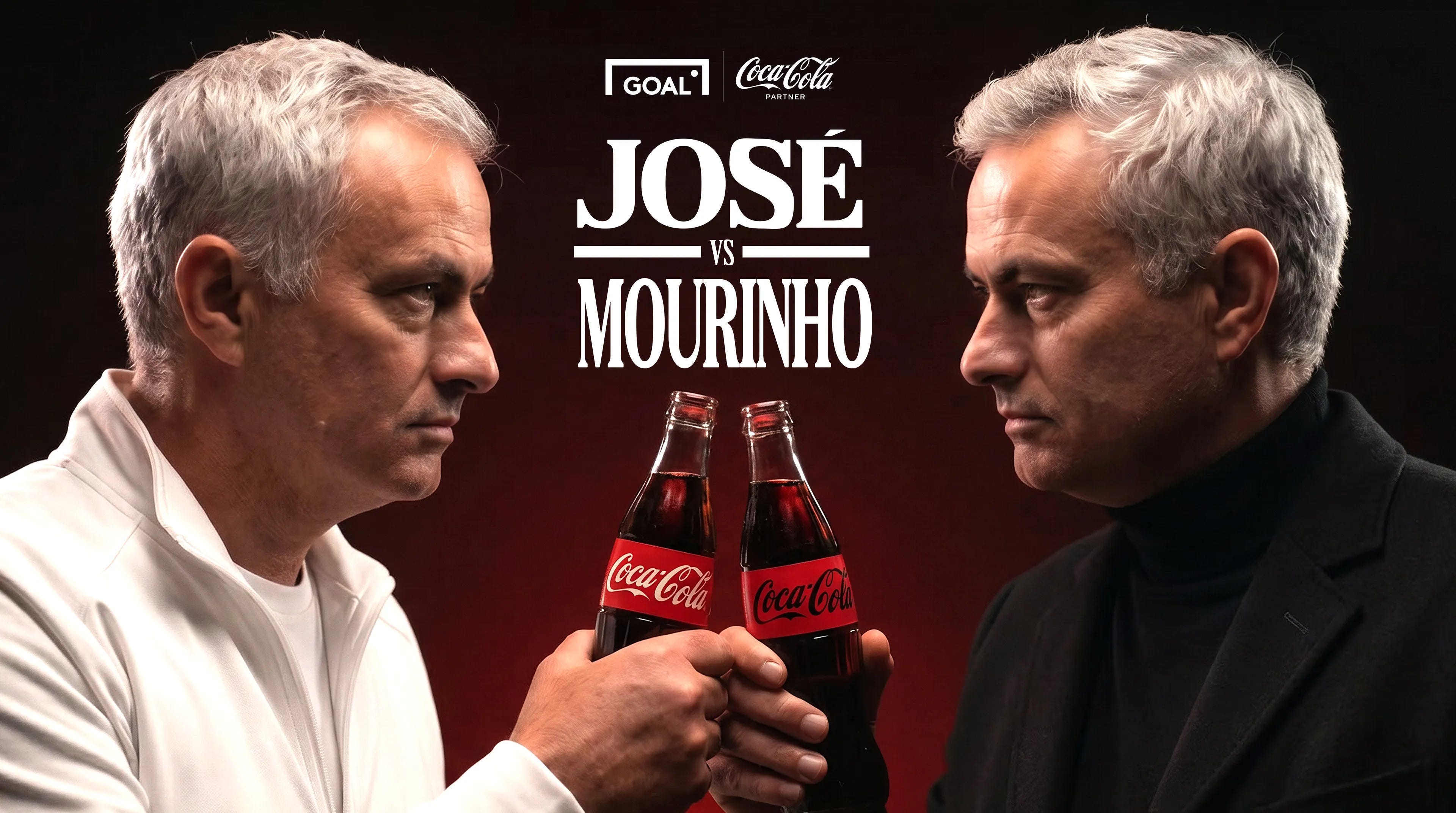
And, to get there, Coke is deploying some notably modern tools. The centerpiece is a daily AI-generated video series starring decorated soccer manager Jose Mourinho — arguing with himself. (A believable enough premise with The Special One.) 😜
“This is entertainment and storytelling built for modern football culture that is real-time, social, and engaging,” said Coca-Cola chief marketing officer Manolo Arroyo, “while bringing to life the rollercoaster of emotions fan experience during matches.”
The Jose vs. Mourinho series sits alongside a broader campaign portfolio that includes global brand films, a custom sticker collaboration with Panini, and the small matter of being the exclusive soft drink supplier at all World Cup matches.
(4) After years of planning, permitting battles, and more than 30,000 public comments, BNSF Railway’s most ambitious infrastructure project is finally moving forward. On June 2, the Barstow (California) City Council unanimously approved the Berkshire-owned railroad’s $4 billion Barstow International Gateway.
The 4,500-acre intermodal complex — which carries the satisfyingly self-aware acronym BIG — will fundamentally rewire how imported goods move from America’s busiest ports into the interior of the country.
Consider the current sad situation: When international containers arrive at the Ports of Los Angeles or Long Beach — the twin gateway through which ~40% of American imports flow — they are soon mired in a maddeningly inefficient process.
Containers are loaded onto semi-trucks, which grind through some of the most congested highway corridors in North America, before eventually reaching a rail transfer facility. Somewhere in that slow, expensive tangle, time and money bleed out.
BIG fixes this bottleneck by facilitating the direct transfer of containers from ships at port onto trains that run along the BNSF mainline to Barstow, where they will be processed and staged for eastbound travel. Construction could begin later this year.
(5) In some sense, See’s Candies was the proof of concept for everything that followed at Berkshire Hathaway. A business that so delighted its customers that it could raise prices with impunity, weather downturns, and compound quietly for decades while lesser competitors withered and died.
Perhaps more than anything else, this California-based chocolatier transformed Warren Buffett from a Grahamian bargain hunter into a buyer of enduring brands.
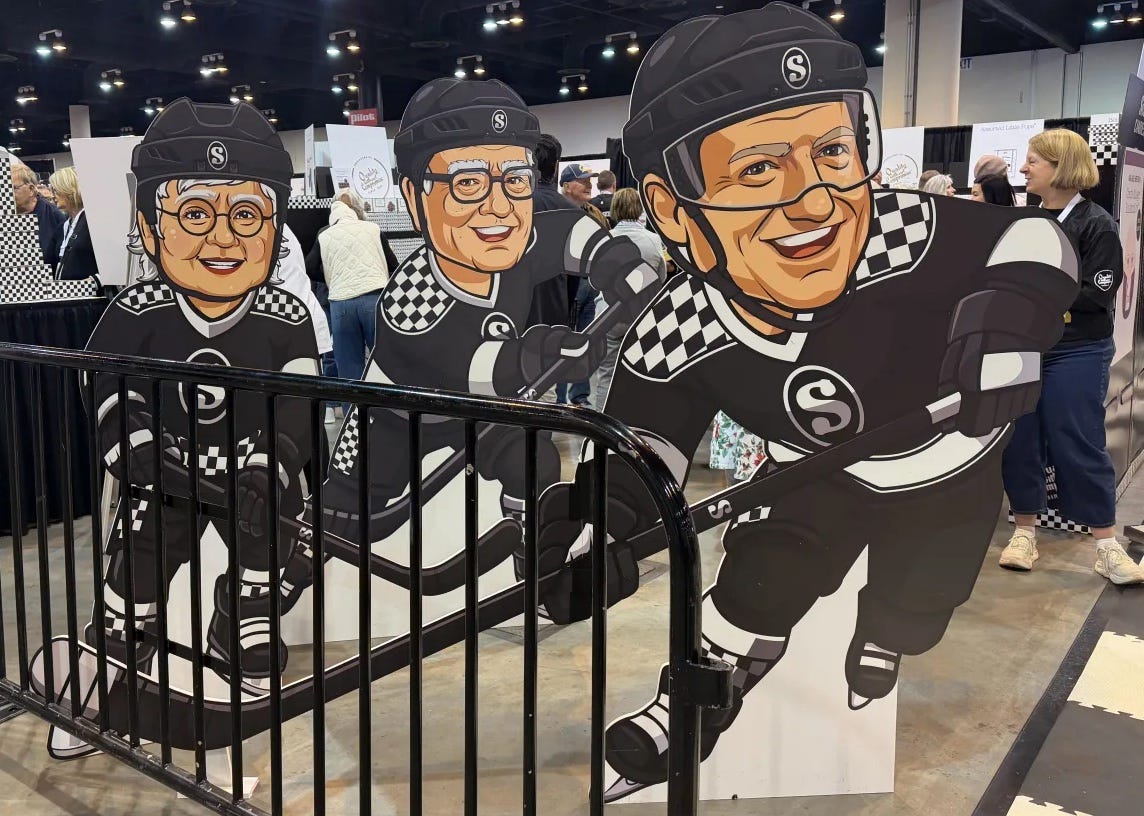
And the business is still humming along. “What I am very thankful for is the fact that our consumers love us,” See’s CEO Pat Egan told Becky Quick last month. “And, truly, that’s not just a line. That is reality.” He noted that the company’s numbers are up for the year — powered by its best Valentine’s Day ever — unlike most in the candy biz.
On the cost front, the picture has brightened considerably. After a jarring 5-6x surge in cocoa prices in recent years, the market “is definitely back [down] to Earth”.
Even better, See’s has already locked in favorable cocoa supply contracts through 2027.
(6) As part of Alphabet’s $85 billion equity offering, CEO Sundar Pichai explained the AI vision behind his company’s ravenous capital appetite. “AI is the most profound platform shift of our lifetimes,” he told investors. “It’s lighting up every part of our business, driving an expansionary moment in Search, turbocharging Cloud, and much more.” He added that the company faced such strong demand for its AI solutions and services that it is “meaningfully exceeding our available supply”.
“By scaling our investments,” continued Pichai, “we intend to secure the foundational infrastructure necessary for the significant growth opportunity ahead.”
Alphabet’s financials are simply staggering. Q1 2026 marked its eleventh consecutive quarter of double-digit sales growth, as revenue reached $110 billion. Operating income, meanwhile, tripled over the past five years — hitting $40 billion in the quarter.
(7) Ben Thompson of Stratechery fame sees Alphabet as uniquely positioned to not only participate in the AI economy, but to profit from almost any version of it that ultimately comes to pass. “The company is not only investing in AI,” he wrote, “but has optionality in terms of outcomes.”
“Its Services business benefits from the investment, it is in contention at the model layer with Gemini, and it can sell capacity to the frontier labs. Moreover, that capacity has a sustainable cost advantage because of TPUs, which means that in a world where compute becomes a commodity — as hard as that it is to imagine right now — Google is the hyperscaler that is poised to make the most profit.”
In other words: If AI supercharges search and advertising, Alphabet’s Services business wins. If the model layer consolidates around a handful of players, Gemini is as credible a contender as any. If compute becomes infrastructure — like electricity or bandwidth — Alphabet’s custom TPU chips give it a structural cost advantage over every rival running on merchant silicon.
In Thompson’s estimation, there is no obvious AI future in which Google loses badly. Which would be excellent news for Berkshire and its ~$30 billion investment.
(8) Berkshire-owned WPLG Local 10 in Miami inked a new deal to become the full broadcast home of the Miami Heat for the 2026/27 season. Last year, the station simulcast twelve games to impressive results. Viewership more than doubled — and sometimes tripled — the team’s normal audience figures on other platforms.
This made it an easy decision to re-up for another season — with an additional option year as well. “If we hadn’t seen the business results that we saw last year from just the twelve games,” said Heat chief marketing officer Michael McCullough, “we may have [had] a different conversation. But we saw that the increased reach leads to business results. Measurable business results.” Quite a vote of confidence for WPLG.
(9) Warren Buffett has long believed that those steering the good ship Berkshire should have sufficient “skin in the game” to align their interests with those of the conglomerate’s shareholders. So it’s worth noting that Charles Chang, who stepped into the CFO role at the start of this month, disclosed an initial ~$4.4 million stake in Berkshire. He owns six Class A shares through an LLC that he controls.
Chang, who previously served as CFO of Berkshire Hathaway Energy, takes the reins from the great Marc Hamburg. For the next year, Chang and Hamburg “will work together to ensure a smooth and seamless transition period”.
(10) And, finally, a classic Warren and Charlie moment from the 1996 annual shareholders meeting. “Warren talks about these discounted cash flows,” said Charlie “[but] I’ve never seen him do one.”
“There are some things you only do in private, Charlie.” 🤣
Correction:
https://www.youtube.com/watch?v=ihJEBCrZM_I
"Practically, I'd say three quarters of advertising works on pure Pavlov. Think how association, pure association, works. Take Coca-Cola Company, we're the biggest shareholder. They want to be associated with every wonderful image."---Charlie Munger
Here's Marilyn Monroe for Coca-Cola, and Jack Paar seeking a date in "Love Nest" 1951:
https://www.youtube.com/watch?v=ihjEBCrZM_l