
Hunting down a Warren Buffett speech or interview that hasn’t already been picked over a thousand times isn’t easy. But, every so often, I manage to find one.
This month’s transcript for paid supporters comes from a lesser-known Buffett Q&A where he opens up on some of his investments that rarely get much airtime. Plus, a smattering of topics of perennial interest to investors like interest rates, IPOs, etc.
Here is a sneak peek at Buffett’s response when asked — for probably the thousandth time in his life — whether he saw a recession looming on the horizon.
I just hope I see a lot of recessions. I hope I live long enough! (Laughs)
I don’t know how many recessions I’ve lived through. I was born on August 30, 1930, and the Dow was a little over 250. By the time I got out of college, there were only one or two days after my birth that it had been that high. I don’t know whether I’ve lived through eight recessions or six recessions or you name it, but that’s [just] part of the capitalistic system.
We will have them — and it won’t change anything Berkshire invests in. It may offer us more opportunities, in marketable securities or businesses. If we see a business [we like] — [even if] that [yield curve] inversion has gone to a hundred basis points, we’re going to buy it. And we will buy it enthusiastically.
The full transcript will go out to paid subscribers early next week. If you’ve been on the fence about upgrading, there’s no time like the present.
More news and notes from the Berkshire Hathaway orbit…
Berkshire Hathaway’s $8.5 billion acquisition of Taylor Morrison cleared an important hurdle this week. On Wednesday, the Arizona-based homebuilder held a special meeting to vote on the deal — and shareholders overwhelmingly signaled their support for joining Berkshire with ~97% of all votes cast in favor of the move.
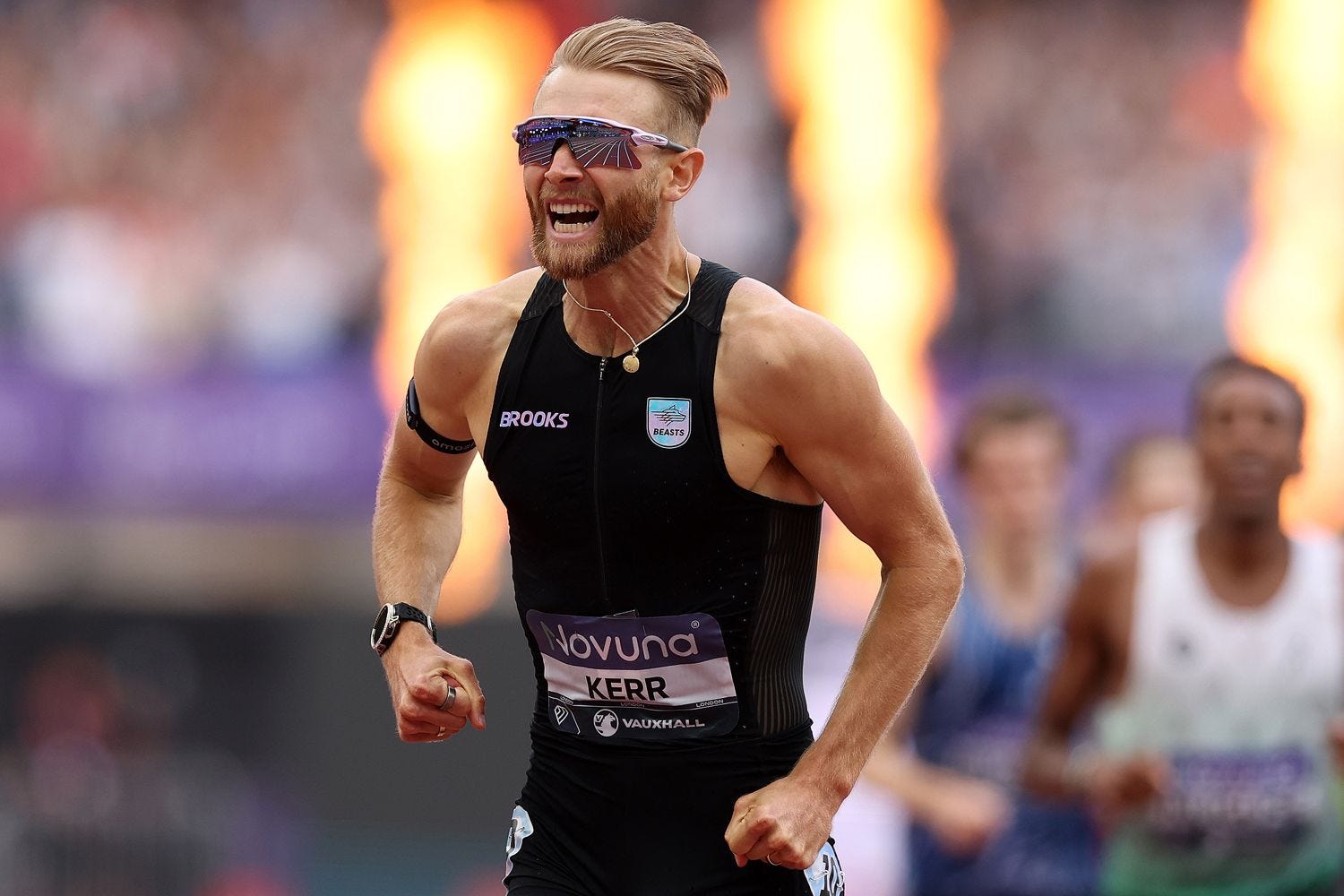
Brooks just earned some of the best marketing that money can’t buy. Last weekend, Scottish runner Josh Kerr shattered the world record for the mile, one of track and field’s longest-standing records, running it in 3:42.66 at the London Diamond League. And did so wearing a custom speed suit and race spike (shoes) made in partnership with sponsor Brooks. The whole campaign was dubbed “Project 222” — a nod to the 222 seconds needed to break the record. Kudos to Josh and Brooks!
Alphabet posted double-digit revenue growth for the twelfth straight quarter. “Our AI investments are redefining what’s possible across every part of our business,” said CEO Sundar Pichai. “Q2 was an amazing quarter, with Alphabet revenues growing 24% year-over-year [to $119.8 billion] and Google Cloud revenues accelerating to 82% growth, driven by demand for AI infrastructure and AI solutions.”
The tech conglomerate’s Q2 capital expenditures hit a record $44.9 billion, with 60% spent on technical infrastructure and 40% on data centers and networking equipment. Alphabet now forecasts cap-ex for the full year to reach $195-205 billion, up from previous guidance for $180-190 billion. And *gulp* Google execs expect that number to climb even higher next year.
Coca-Cola’s $3 billion Fairlife dairy brand has been forced to suspend all U.S. production after a recent ransomware attack. Hackers accessed a portion of Fairlife’s systems, including those related to production, which led to operations being taken offline indefinitely. “Product quality and safety have not been impacted,” said Coke. The ransomware group Anubis has since claimed responsibility and threatened a data leak if not paid. (Fairlife’s Canadian operations are not affected by this odd situation.)
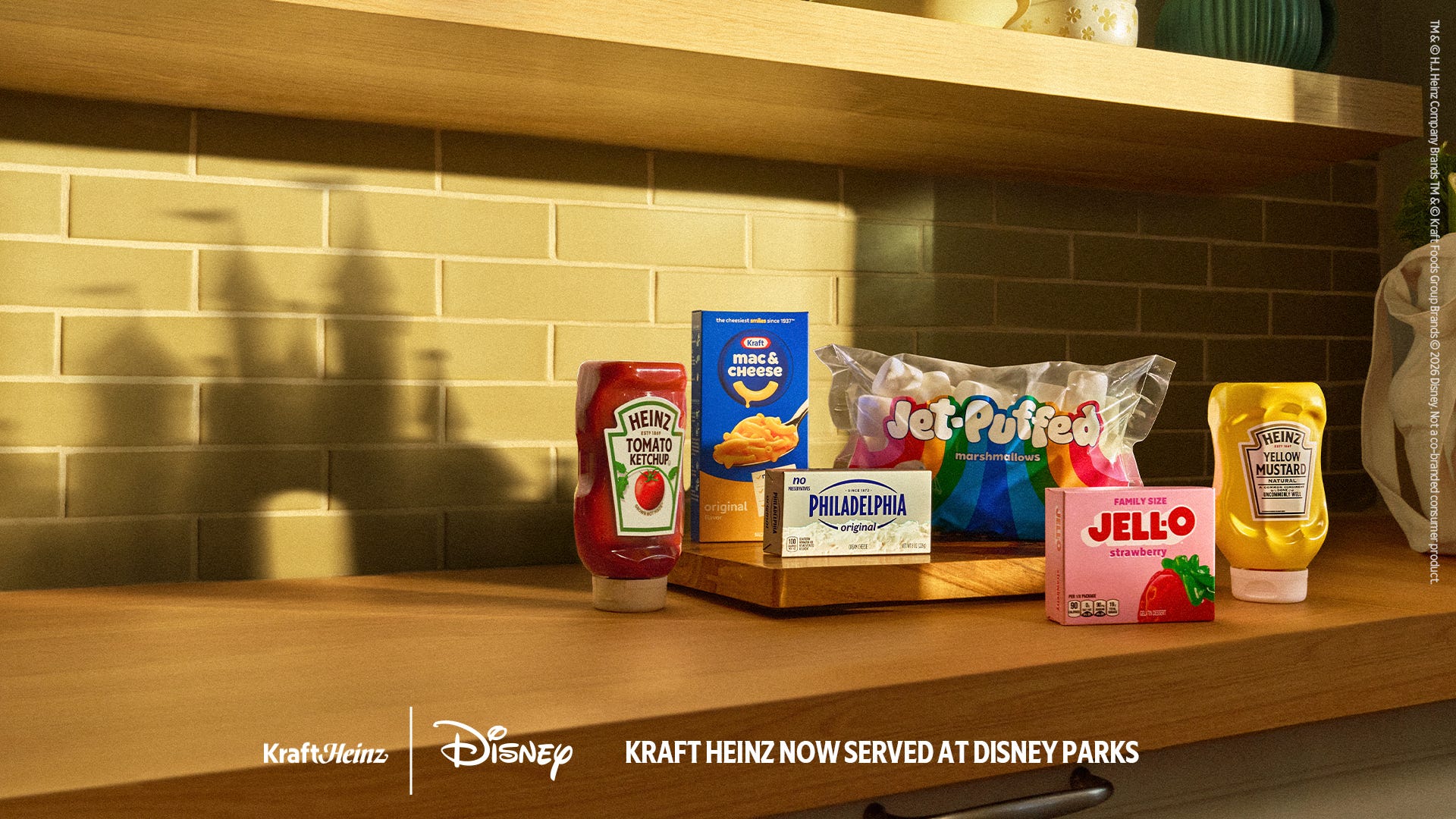
Kraft Heinz and The Walt Disney Company inked a long-term strategic alliance to bring fan-favorite food brands like Heinz, Philadelphia, and Kraft Mac & Cheese to the Disney Parks. Notably, Heinz will become the exclusive condiment supplier across Disneyland, Walt Disney World, and the Disney Cruise Lines — echoing the kind of built-in visibility that Coca-Cola has long enjoyed as Disney’s official soft drink partner. KHC can also now use Disney characters on select retail products.
For Kraft Heinz president Nicolas Amaya — who followed CEO Steve Cahillane over from Kellogg — it’s time to dream big. “That’s what marketing is about today,” he told the Wall Street Journal. “It’s about creating experiences that are memorable.” Translation: expect condiments to get a serious glow-up, starting with lightsaber-shaped ketchup dispensers in Star Wars: Galaxy’s Edge.
American Express is once again the safest name in plastic, notching its 19th consecutive year with the lowest U.S. fraud rate among major card networks. The secret weapon behind its fraud-fighting success? A steady, aggressive bet on technology. The company’s adaptive machine-learning models can flag a fraudulent purchase within milliseconds of a swipe. And its proprietary generative AI system has now doubled the number of fraud cases resolved on the spot.
“Fraud is constantly evolving,” said executive vice president Amber Gupta, “and so are we. For years, American Express has been at the forefront of applying AI and machine learning to fraud prevention — and we continue to build on those capabilities today, investing in the technology and talent needed to stay ahead.”
Part of what makes following Berkshire so much fun is randomly stumbling onto pieces of the empire that you’d never even heard about before. This week’s example: AM Best reaffirmed the excellent financial strength and credit ratings on two obscure Berkshire-owned insurers, Old United Casualty Company (OUC) and Old United Life Insurance Company (OUL). OUC writes vehicle service contracts for auto dealerships owned by Berkshire Hathaway Automotive — with ~90% of written premiums coming from Kansas alone. AM Best praised its “track record of stable and strong operating performance” and “consistently profitable underwriting results”.
OUL is the smaller, quieter sibling. It sells credit life and credit accident/health insurance — essentially, insurance coverage that pays off a loan if the borrower suffers death or disability. That business is, admittedly, fading as consumer preferences shift away from these products and more towards vehicle service contracts. OUC and OUL might make up only a small, unglamorous corner of the trillion-dollar conglomerate, but are also a reminder that Berkshire’s insurance operations aren’t just GEICO and reinsurance giants. There’s an entire layer of niche, hyper-local insurers quietly chipping in behind the scenes.
Shortly before this issue went to press, Berkshire subsidiary CORT Business Services announced the acquisition of Dwellworks Living. “By combining Dwellworks Living’s expertise in temporary living with CORT’s resources, scale, and long-standing leadership in mobility-related services, the combined organization will be positioned to deliver even greater value to clients and partners worldwide,” read the press release. The deal is expected to close at the end of this month.