
It’s been a quiet week on the Berkshire Hathaway front, so I thought I’d use the space to share a few thoughts on America’s 250th birthday…
People who build great things should reap great rewards.
What makes the American experiment remarkable is that those same rewards are available to the rest of us, too.
The founders wrote that all men are created equal — not that all men would end up equal. The American Dream was never a promise of guaranteed outcomes, but one of opportunity. The chance to build a good life from any starting point and to strive for something better through your own honest effort.
And nowhere is that opportunity more real than in the stock market — where anyone, not just the people who build the future, can own a piece of it.
I often come back to the iPhone. When Apple CEO Steve Jobs walked onstage and held up that original device, it felt like the entire world took notice. Anyone watching that day who sensed that this small slab of glass and aluminum was about to change everything could have gotten in on the action with a few clicks on their computer.
(Or, if that’s too speculative for you, you could have been like Warren Buffett and waited nearly a decade after the iPhone reveal to jump in. And still made a killing.)
That’s the beauty of public markets. Millions of ordinary people — anyone, really — can own a sliver of the companies reshaping the world. You don’t need the talent to build the product. You don’t need the vision to imagine what others can’t. You just need the judgment to spot something real, the conviction to back it with your own money, and the patience to let the magic of compounding do its thing.
Not every stock is Apple, obviously. But you don’t need to pick Apple — or any individual company — to do well owning American business broadly.
And, happily, almost every barrier standing between you and said ownership has fallen away in recent years. Not that long ago, you needed a stockbroker, a steep account minimum, round lots of 100 shares, and fees that ate into your returns before the snowball could even start rolling. Today, fractional shares make investing possible with a single dollar — and commissions have all but disappeared.
The door is wide open for anyone willing to walk through it.
More news and notes from the Berkshire Hathaway orbit…
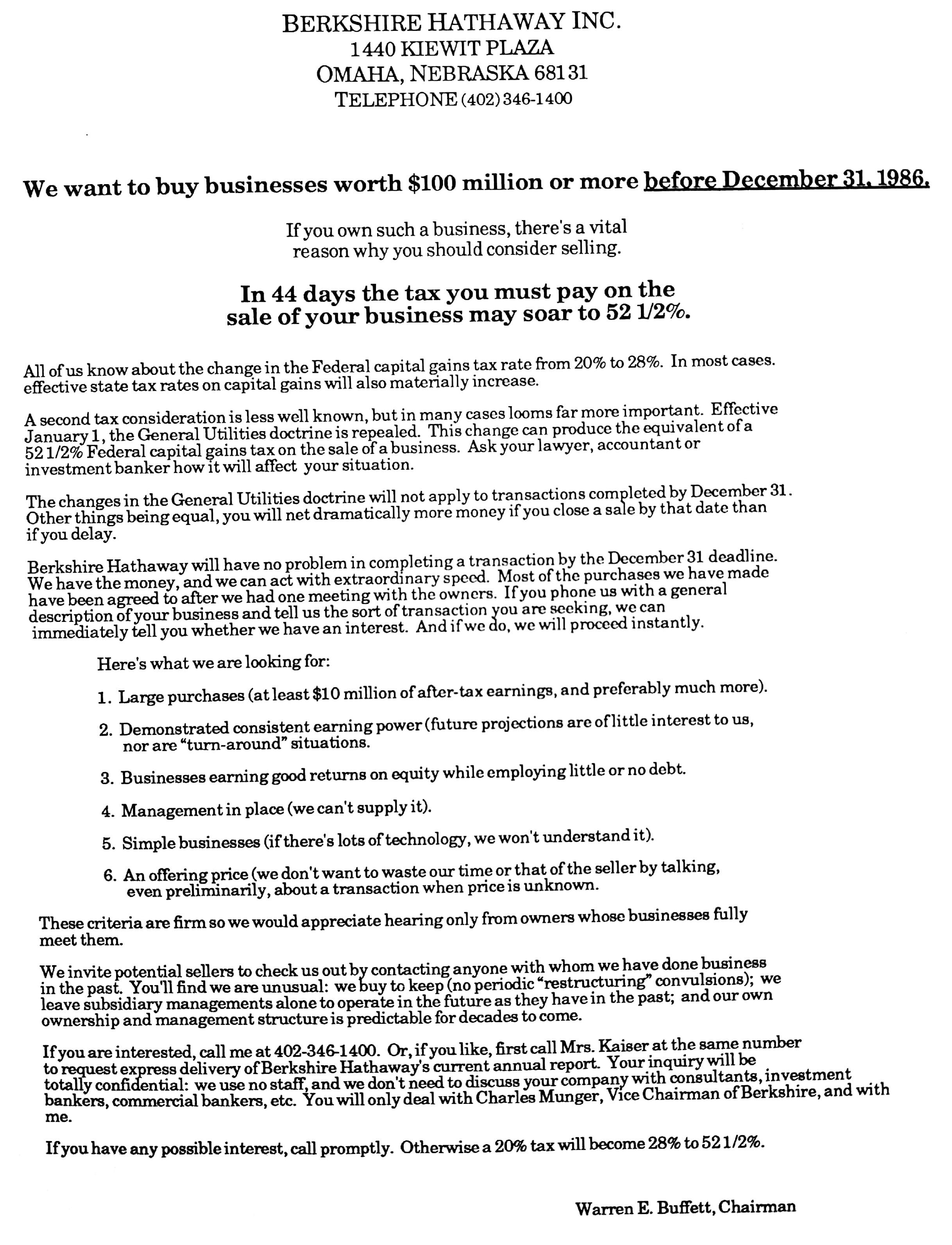
J2 Labs, a Boca Raton-based family office, took a page out of Warren Buffett’s book. Literally. It has begun running an advertisement in the South Florida Sun Sentinel very closely modeled on Buffett’s own 1986 invitation for owners to sell their businesses to Berkshire Hathaway. A clever bit of financial-world nostalgia marketing, paired with a bet that authenticity and simplicity can still cut through the noise of the AI era.
BNSF Railway is turning last year’s safety milestones into the new normal. After posting the safest year in company history in 2025, the Berkshire-owned railroad has gotten off to an even better start this year. Through mid-June, BNSF’s injury frequency ratio (-28%), rail equipment incidents (-12%), and total injuries (-31%) are all down big year-over-year. “We’ve led the industry for the last decade in fewest train incidents,” said communications director Kendall Kirkham Sloan. “We’ve maintained our status as a safety leader because it’s non-negotiable for us, embedded into our culture, and a main ingredient to maintaining our unmatched service.”
If you’ve caught any World Cup coverage this summer, you’ve likely spotted Bank of America signs and branding around the pitch. The Charlotte-based bank, still a top-five holding in Berkshire’s portfolio despite recent trims, became FIFA’s first-ever banking sponsor in a deal reportedly worth many tens of millions (possible even up as high as $100 million). CEO Brian Moynihan tells the Boston Globe this has been money well spent, calling the tournament’s economic ripple effect both real and welcome. “Our goal, as this came to the United States, was we could work with FIFA to bring soccer to the local markets,” he said. “We feel very good about what we’ve seen so far.”
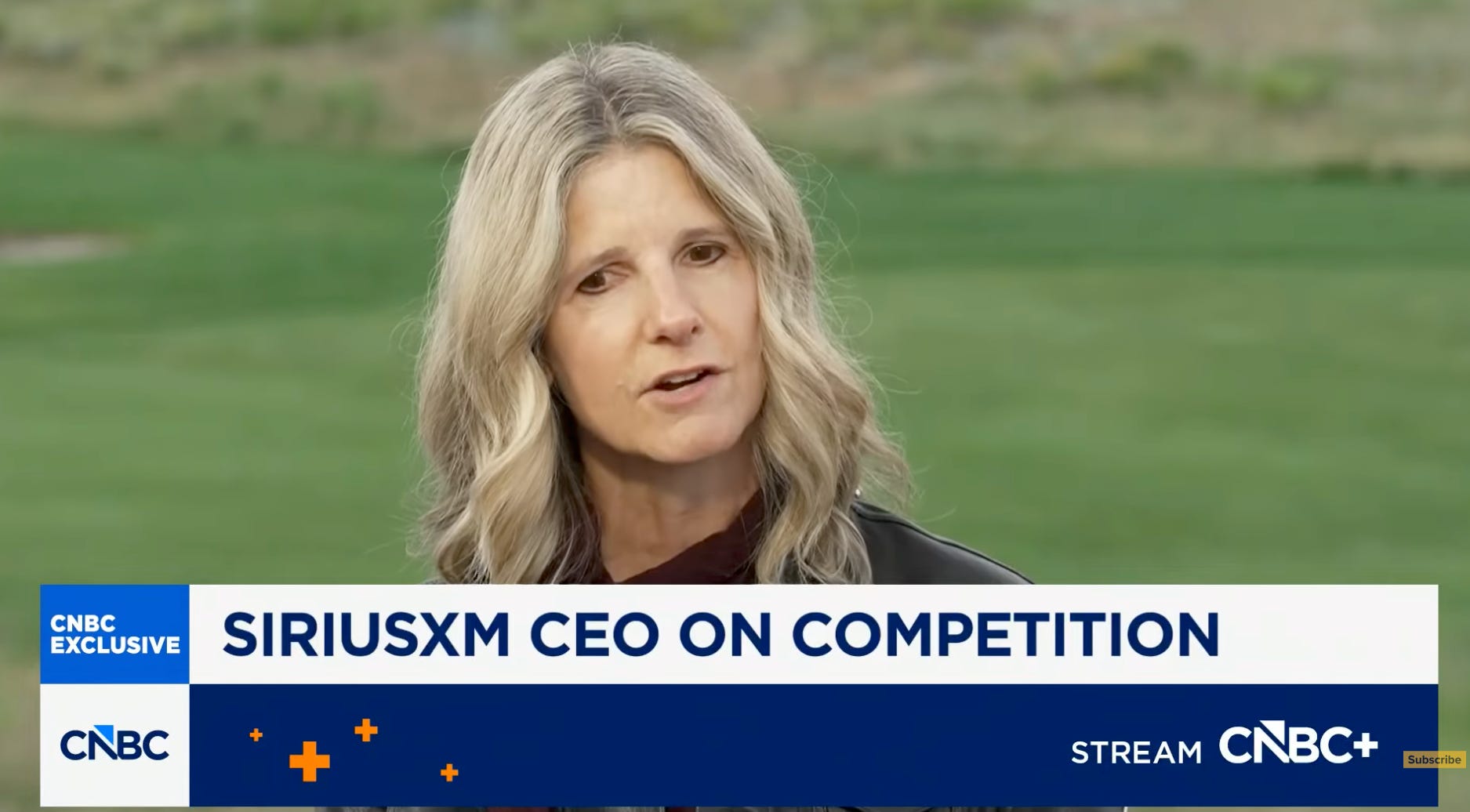
Sirius XM CEO Jennifer Witz, speaking from the Allen & Co. conference in Sun Valley, told CNBC that the satellite radio service’s turnaround is taking hold. “We reset the strategy in late 2024,” she said. “We have three core priorities — and we are delivering against each one of those. We are improving the subscriber experience at Sirius XM and the overall economics by focusing on our core in-car audiences. On the ad side of the business, we continue to build that and grow our business — especially with our new YouTube partnership. We’re now reaching 255 million listeners across the U.S. and Canada. And, then, we’re driving efficiencies across the company and that’s helping drive profitability and, ultimately, for [improved] cash flow generation.”
Berkshire’s Richline Group — a metals and jewelry manufacturer — promoted two executives into newly-created roles to better bring the company’s various businesses under unified corporate management. Arien Gessner steps into the role of chief revenue officer and Moss Makhoulian becomes senior vice president of supply chain and operations. “I am pleased to announce these two promotions in support of our longer-term strategy,” said Richline CEO Dave Meleski. “These expanded roles speak to the confidence we have in them as we plan for the future of our company.”
And, to finish off the week, a word from Warren Buffett on how the liquidity and real-time pricing of stock markets can eat away at an investor’s discipline. (This was filmed in February 2020, shortly before the Covid-19 pandemic.)
I think what Warren recognized about Apple—perhaps with nudging by one of the Ts—was that the iPhone and iPad were not simply new products but were products designed to be easily upgraded and capable of holding hundreds of different apps, which would tag along with an upgrade. My wife and I have now upgraded our devices multiple times; we have never given thought to switching to a Droid. That has created a monstrous moat for Apple, and Warren recognized that. Warren didn’t ‘convert’ to tech; he recognized value—enough value to commit over $30 billion—and turn it into over a 150 billion gain. Not bad for an over 85-year old!.
Kevin,
The 250th anniversary has caused me to focus more on the key sentence in the Declaration: “All men are created equal.” It is remarkable by how much of a ‘virtue’ this statement is: we have much to do to realize that we are all—not just men, white men, are created equal. Having this as our virtue—as a goal we seek, imperfectly, to achieve—is what has made the U.S. unusual—and remarkable. But we still have much to live up to—to motivate us as a people.