
When Berkshire Hathaway comes calling, things tend to move fast. In a recent interview with ResiClub, Taylor Morrison chief marketing officer Stephanie McCarty likened the whiplash pace of the acquisition to going “from a blind date to the altar”. In large part because of the instant chemistry between the companies’ leaders. “Greg [Abel] and Sheryl [Palmer] hit it off and had a great rapport from day one.”
Clayton Properties Group’s site-built builders will now roll up into Taylor Morrison, as Berkshire moves to cleanly separate its manufactured home operations from its more traditional site-built business. McCarty noted that no final decision has been made about whether the newly-absorbed CPG builders will officially rebrand under the Taylor Morrison name or continue under their own.
“We have been spending a lot of time since the announcement researching all their brands and running some tests and surveys around overall brand health,” she said. “We’re not going to make any [brand] decisions in haste.” Some of the smaller names could be quickly tucked into the Taylor Morrison brand, while builders with decades of local goodwill and hard-won reputations might continue to fly their own flags.
Berkshire is going Hollywood. Amazon MGM Studios and Jazwares are teaming up to bring toy sensation Squishmallows to the big screen. The studio has tapped producer Beau Flynn (Moana, Hello Kitty) to shepherd the silky-smooth, kawaii plush universe into a full-blown tentpole feature. According to Variety, Amazon MGM is swinging for the fences on this one, aiming for a global, four-quadrant (appeals to all four major moviegoer demographic groups: males under 25, males over 25, females under 25, and females over 25) event film, rather than a quick cash-in on a fad.
No word yet on whether the film will be animated, live action, or a hybrid of the two. But whichever direction the studio takes, the commercial upside is enormous. During the pandemic, Squishmallows became a cultural juggernaut (and billion-dollar brand) that still dominates TikTok and now sells two toys every second. Jazwares landed at Berkshire almost by accident, arriving as part of the Alleghany acquisition in 2022.
In the latest AM Best ranking of the world’s largest reinsurers, Lloyd’s pipped Berkshire to the top spot in the non-IFRS-17 category. (IFRS-17 is an international accounting framework for insurers, but Berkshire and some others use alternatives like GAAP.) Berkshire had topped the list a year ago, but lost out this time due to foreign currency fluctuations and the conglomerate’s underwriting discipline. Gross premiums declined 7.9% as Ajit Jain and crew walked away from property-catastrophe deals and other business that no longer cleared Berkshire’s risk/return bar.
In a softening reinsurance market — like we see now — Berkshire refuses to chase volume at any price. Instead, it scales back, remains disciplined, and patiently waits for conditions to improve. Even if that means dropping on an AM Best list or two.
As Tim Cook closes in on retirement, the outgoing Apple CEO remains just as understated as ever. Speaking with CBS Mornings from Apple’s new Advanced Manufacturing Center in Houston, Texas, where Mac minis are slated to roll off the line as soon as this fall, he looked back at his tenure atop the tech giant. But not without deflecting the spotlight one last time. “In my view,” he said, “your legacy is described by others, not yourself. I hope that people say I was a good and decent man. If they say that at the end of the day, I [will] feel like I’ve achieved something.”
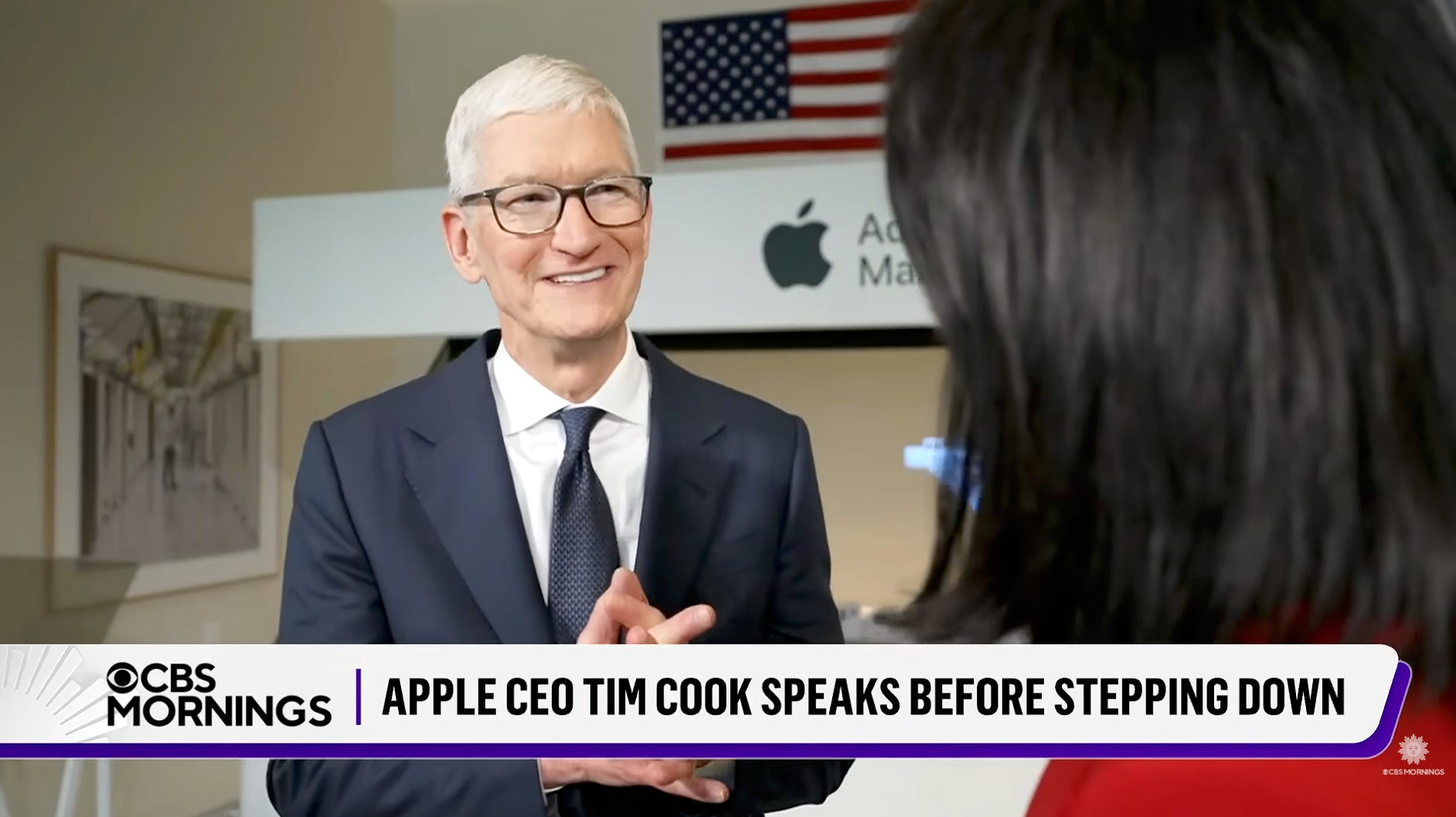
Off camera, Cook told CBS reporter Jo Ling Kent that Apple will continue to be his primary focus even after stepping back into the role of executive chairman. Sounds a bit like the Warren Buffett approach to retirement at Berkshire. Passing the torch to the next generation, but staying heavily involved behind the scenes.
A federal appeals court upheld the $1-billion-plus antitrust settlement stemming from the Sitzer-Burnett case against real estate brokerages — including Berkshire’s HomeServices of America. The settlement was originally struck in 2024, but some objectors pushed to have it thrown out as inadequate. HomeServices’s share comes to $250 million, payable over four years, and CEO Chris Kelly was quick to call the “additional certainty” provided by the settlement a win for his brokerage. (HomeServices has already made payments in escrow of $130 million to date.)
That said, don’t entirely file this case under closed. The plaintiffs could yet take their fight to the U.S. Supreme Court, though whether it would be granted certiorari or not is questionable, and Berkshire Hathaway Energy (parent of HomeServices) still faces a proposed class action lawsuit tied to the Sitzer-Burnett situation.
Still, on net, a good day for HomeServices.
American Express just ran the table on customer satisfaction. For the seventh consecutive year, American Express claimed the top spot in the J.D. Power U.S. Credit Card Satisfaction Study — extending its remarkable run to sixteen total wins since the study began two decades ago. And, really, this one wasn’t even close. J.D. Power surveyed thousands of cardholders across seven key categories of overall satisfaction — and AmEx finished first in each and every one of them.
“Being ranked number one in customer satisfaction for seven years running is a powerful reflection of the value and service we deliver every day,” said group president Howard Grosfield. “We never stop raising the bar for our Card Members.”
Two other Berkshire subsidiaries won plaudits this week, as well.
Taylor Morrison was named to the “Best Companies to Work For” list by U.S. News & World Report for the fourth year running. “I’ve always believed that when we put our people first, strong business results follow,” said CEO Sheryl Palmer, “and that philosophy guides our celebrated company culture.”
Meanwhile, Dairy Queen landed at #6 on Entrepreneur’s “Fastest-Growing Franchises” list on the strength of its international expansion. “Being recognized by Entrepreneur as a fastest growing international franchise is an honor that reflects the strength of our global business,” said int’l COO Nicolas Boudet.
DQ’s international secret? Enthusiastically embracing local tastes and flavors. It doesn’t export the same menu everywhere — but customizes ingredients and recipes for each particular market’s preferences. “Our soft serve stays consistent around the world, but many of the flavors become localized,” R&D vice president Jane Friedrich told the Twin Cities Business Show. “In Thailand, for example, we offer a seasonal Mango Sticky Rice Blizzard inspired by one of the country’s most popular desserts.”
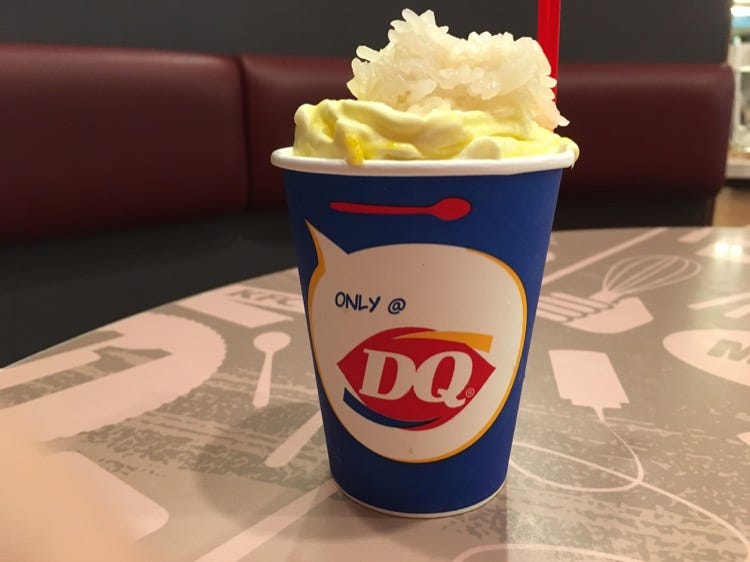
It’s a high-wire act that DQ has learned to walk gracefully — and nowhere is the balance trickier to find than at home. In the United States, innovation and nostalgia constantly tug customers in opposite directions. “Sometimes, consumers want their favorites back,” she said. “Other times, they’re looking for something completely new. The key is understanding which moment you’re in. People trust Dairy Queen. They know what to expect when they come here. That gives us room to innovate, but we’re never going to launch something that doesn’t test well. We spend a tremendous amount of time making sure every product delivers on the promise of the concept.”
Warren Buffett may be the most biographied businessman alive. Some run many hundreds of pages, chronicling every deal, every dollar, every decade in exhaustive detail. (And, believe me, I’m here for all of that and more.)
But one of my favorite treatments of Buffett is also one of the shortest: a single chapter from The Money Masters by John Train. A no-nonsense distillation of the essential lessons and teachings that shaped his storied career — written before Buffett achieved worldwide celebrity. Sometimes, brevity is the sharpest lens.
A comprehensive summary of what I learned re-reading this chapter will go out to paid supporters early next week. So, if you’ve been on the fence about upgrading, now might just be the perfect time.
I read John Train’s chapter on Warren soon after the book came out. In it Train asks Warren what questions would he put on a job application. His answer: oh, just one; are you a fanatic? I might change his answer slightly to: are you capable of being a fanatic. Warren is unusual in being a life-long fanatic in investing. Some of us wander some, given the need.
I would love it, if someone could write a serious study of Warren’s use of incentives. He once wrote that, if you set them correctly, you can look forward to writing large checks. Chuck Huggins once told me how he and Warren came to a quick agreement on compensation after the closing of the See’s purchase in 1974: Huggins would be paid a percentage of the cash he sent to Omaha annually. Initially, it was an oral agreement. In due course it was recorded. “It was only a couple of paragraphs!”, added Huggins. (Imagine a lawyer writing up the agreement!) I’m sure that agreement was in force during his entire 30+ year career. I’m also sure he retired wealthy—as well as having enabled Warren to create a billion dollars of Berkshire shareholder wealth. That story greatly helped me to understand how Warren was able to manage, while sitting in his office, reading, and waiting for the phone to ring. An interesting question is: how was Warren able to function that way? My simple answer if 1. Possessing the right temperament, 2. Having controlling ownership in Berkshire. We all benefited!
Thank you! I'll be updating my kids on the Squishmallows movie immediately, I read it here first. They're big fans and it's a good way to get them interested in Berkshire Harhaway.