
Consider this week’s issue a little experiment. I’ve tweaked the format to (hopefully) make the news capsules easier to read and digest.
(1) With global energy markets on edge, the United States has enlisted some of the most powerful names in insurance — Berkshire Hathaway among them — to keep oil flowing through the Strait of Hormuz. The U.S. International Development Finance Corporation doubled its maritime reinsurance commitment to $40 billion thanks to the new additions. Chubb, a Berkshire investee, serves as lead underwriter: setting pricing and terms, issuing policies, and managing claims.
Berkshire’s involvement, though, carries particular symbolic weight. As the U.S. works to restore confidence in one of the world’s most critical shipping lanes, having the most celebrated insurance operation on the planet in your corner sends a message.
“We are very pleased to support Chubb and DFC on this initiative,” said Berkshire vice chairman Ajit Jain, “and we commend all the reinsurers for stepping up to demonstrate how our industry can help to meet important needs as they arise.”
(2) The Artemis II lunar fly-by is fast becoming the greatest Shot on iPhone ad that Apple never made. NASA cleared the crew to bring iPhone 17s on board — leading to some of the most breathtaking and unexpectedly intimate photographs ever taken in deep space. The images captivated the internet: silhouetted selfies of the astronauts, Earth hanging in the darkness behind them, framed perfectly in Orion’s cabin window.

Mission commander Reid Wiseman pushed things even further, using the 8x telephoto zoom on his iPhone 17 Pro Max to photograph the far side of the moon — and the seldom-seen Chebyshev crater. Apple’s marketing team could not have written a better script. The universe, apparently, did it for them.

(3) Hold on to your hats, but PacifiCorp received a bit of good news this week. The Oregon Court of Appeals overturned a lower court ruling that had allowed wildfire litigation to proceed as a sweeping class action against the Berkshire Hathaway Energy subsidiary. The wildfires were separated by distances of more than 100 miles and the trial judge erred by instructing jurors to “assume that the evidence at trial applies to all class members” when a lot of said evidence applied only to particular fires — and not all of them as a group.
The case now returns to the lower court, which must decide whether a unified class action can still be justified or whether the litigation should now be broken into separate proceedings. That distinction matters enormously: class actions typically lower the cost and complexity for plaintiffs and, without that structure, PacifiCorp would likely face less total liability.
PacifiCorp welcomed the ruling. “PacifiCorp is sensitive to the profound losses experienced by members of our communities,” the utility said in a statement. “There are no winners in wildfire; however, the Court’s decision supports PacifiCorp’s longstanding belief that this process was prejudicial and not appropriate for managing wildfire litigation. The company remains open to resolving reasonable claims and will continue to defend against unsupported claims.”
(4) The U.S. freight rail industry just put up one of its best performances in recent memory. According to the Association of American Railroads, total domestic carloads rose 1.7% to an average of 230,401 in March — the strongest result for that month since 2019. Strip out coal, a commodity in structural decline, and this was actually the busiest March for core freight in nearly two decades.
Let’s hope BNSF Railway was right in the thick of that.
“U.S. freight rail traffic posted some of its strongest readings in years,” the AAR reported, “offering one of the clearest signals yet that the goods economy is regaining its footing. Volumes are not simply rising in one corner of the network; they are firming across agriculture, industrial inputs, chemicals, and intermodal corridors that link U.S. consumers to global supply chains.”
(5) Jordan’s Furniture had a lot riding on Connecticut basketball last weekend. The New England-based member of Berkshire’s furniture quartet had boldly promised 20,000 customers full refunds — estimated at roughly $50 million — if both the UConn men’s and women’s teams advanced to their respective NCAA championship games. (The Lady Huskies lost in the Final Four, ending the high-stakes contest.)
Not that Jordan’s was ever fully exposed. The company purchased an insurance policy — presumably from a Berkshire affiliate — to cover the potential payout. “We want this to happen,” retired president Eliot Tatelman said ahead of the Final Four. “Whether [the UConn teams] win or lose, I’ve got to pay for the insurance.”
Win or lose, though, the promotion did exactly what it was designed to do. In one of Jordan’s newer markets, the stunt generated the kind of publicity that no conventional ad campaign could ever buy. “[The response] was terrific,” Tatelman told The Athletic. “Everybody couldn’t believe what they were hearing. It brought in a lot of people. It’s causing a lot of excitement. Every radio, TV station is calling me. I mean, ESPN wants me to be on one of their shows. This is crazy.”
(6) JPMorgan Chase CEO Jamie Dimon’s latest shareholder letter contains a couple of passages that might interest this crowd.
“Remember the poem ‘If—’ by Rudyard Kipling that begins ‘If you can keep your head when all about you are losing theirs’? We will stay true to this.” This just so happens to be one of Charlie Munger’s favorite poems — one he often reached for when urging investors to stay rational amid market chaos.
Dimon also mentioned a certain Omaha-based friend while paying tribute to The American Tailwind. “We operate with a very important silent partner — the U.S. government — noting, as my friend Warren Buffett points out, that his company’s success is predicated upon the extraordinary conditions our country creates. He is right to have said to his shareholders that when they see the American flag, they all should say thank you. We should, too.” 🇺🇸
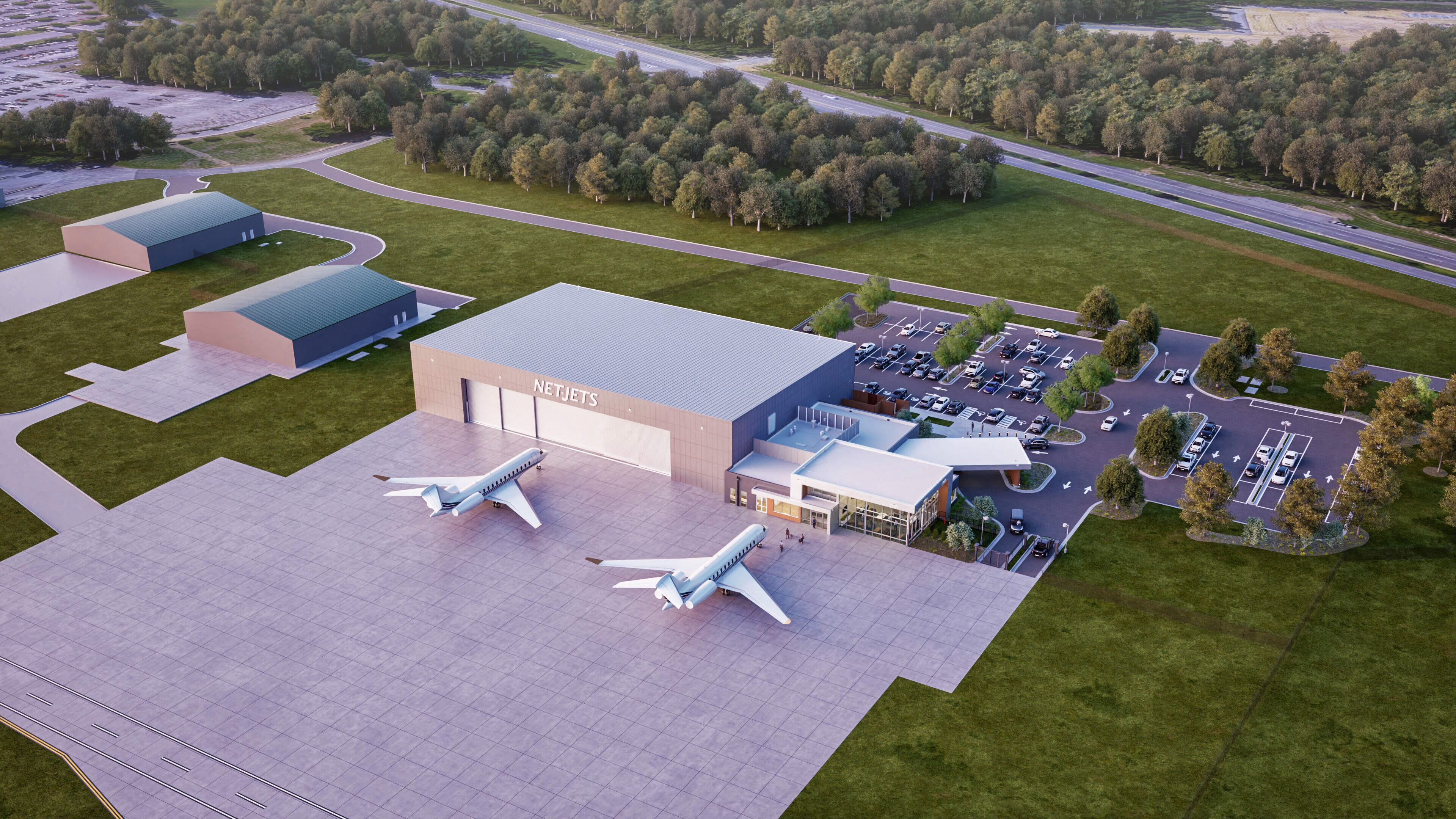
(7) NetJets members flying into Augusta, Georgia, for this weekend’s Masters Tournament may notice something new taking shape at Augusta Regional Airport. The private aviation leader has broken ground on an exclusive-use terminal — with a private ramp already in place to ensure the kind of efficient, discreet arrivals that its high-powered clientele expects.
“Augusta is a key destination for NetJets owners,” said president Patrick Gallagher. “This new facility reflects our commitment to providing elevated, seamless service for owners, and our investment in making their overall experience memorable.”
Last year, NetJets operated nearly 580 flights in and out of Augusta during Masters week — a 34% jump over 2024. And, this year, it expects that number to climb to around 775. When the terminal is complete, that growing crowd will be greeted by a luxurious lounge, private meeting spaces, and premium amenities.
(8) Tokio Marine leadership feels pretty bullish about its new strategic partnership with Berkshire Hathaway. “To some extent,” said head of corporate planning Kenichi Sakakibara, “we’ve built up our company by studying what Berkshire does.” Vice president Kenji Okada expects the relationship to act as a magnet for like-minded investors. “The addition of the long-term investor Berkshire as a shareholder,” he said, “will attract the interest of investors who want to hold for the long term.”
One unnamed executive offered an even more tantalizing take: “The upper limit on acquisition price [for future M&A activity] has, in effect, vanished.”
And, late last night, Bloomberg broke the news that Berkshire raised ¥272.3 billion ($1.7 billion) through a yen-denominated bond offering — in six tranches with maturities ranging from three to thirty years. The timing is interesting. That figure sits very close to the $1.8 billion Berkshire will pay for its stake in Tokio Marine.
(9) The timeline for Apple’s much-anticipated foldable iPhone got a little murkier this week — with conflicting reports from trustworthy sources about its rumored fall release. Nikkei Asia first claimed that engineering setbacks could delay mass production by a few months, potentially pushing initial shipments into early 2027. But Bloomberg’s Mark Gurman pushed back on that, maintaining that the foldable device will land around the same time as the iPhone 18 Pro as originally planned.
Whatever the timeline, Apple engineers reportedly believe they have cracked some of the foldable format’s most stubborn problems — screen quality, durability, and the dreaded crease that mars rival displays when unfolded. It wouldn’t be the first time Apple arrived fashionably late to a category, only to redefine it.
(10) Elsewhere in the Apple universe, sales of its affordable MacBook Neo have so thoroughly exceeded expectations that Apple may prematurely run out of chips. The Neo was built around a clever bit of supply-chain judo: rather than discarding A18 Pro chips with a single faulty GPU core — which cannot be used in the iPhone 16 Pro — it repurposed them for the Neo instead of throwing them away.
“With MacBook Neo being insanely popular,” Tim Culpan wrote in his Culpium newsletter, “the stock of those binned chips will run out before demand gets satisfied.”
“Leaving all that demand on the table is a painful prospect for Apple executives,” he continued, “but going back for another round [of production] would risk killing the sweet profit margins it enjoyed on making a device with ‘effectively free’ chips.”
And one more thing: Ohio Capital Ideas posted an incredible thread over on X about Berkshire’s acquisition record. I thoroughly enjoyed the deep dive into some subs that don’t usually get their moment in the sun. A definite must-read.
Loved the new format!
Built something I think you’ll find useful: https://automatedalpha.substack.com/p/i-reverse-engineered-the-buffettmunger