
Taylor Morrison, one of America’s leading homebuilders, will go into the Berkshire Hathaway history books as the first acquisition of the Greg Abel era.
Last weekend, Berkshire struck a deal to purchase the Scottsdale, Arizona-based company for $72.50 per share — representing a total enterprise value of $8.5 billion. This transaction is expected to close in the second half of the year.
CNBC’s Becky Quick, as usual, had the inside scoop on the deal. Greg Abel flew to Arizona and spent five hours with Taylor Morrison CEO Sheryl Palmer, laying out his vision for how the homebuilder would fit in at Berkshire Hathaway.
“When he came back,” said Quick, “he didn’t think he had a deal. But, about four days later, she called back and said that her directors were okay with it, the price was fair, [and there was] nobody else we would do a deal like this with.”
Abel then spoke with Warren Buffett and lead director Sue Decker about the proposed acquisition, “but he didn’t talk to the rest of the board until after they had completed the deal. That’s kind of the Berkshire way — to move quickly on these things.”
Taylor Morrison primarily builds single-family homes, while also offering mortgage, title, and escrow services that shepherd buyers from contract to close. It operates across twelve states, concentrated in the high-growth Sun Belt and select western metros where population and demographic tailwinds remain robust.
As America’s sixth-largest homebuilder, Taylor Morrison recorded 12,997 new home closings last year at an average sales price of $597,000. It generated $8.12 billion in total revenue — of which 95% came from home closings — and $783 million in profit.
Due to the sluggish U.S. housing market, the company currently guides for ~11,000 home closings this year at a slightly lower average sales price. Looking further ahead, though, Taylor Morrison continues to pursue its long-term target of 20,000 annual home closings by 2028 — even if that goal date might need to be pushed back a bit.
The company’s modern identity took shape in 2007, when the Taylor Woodrow and Morrison Homes brands merged into a single platform. Sheryl Palmer was named CEO shortly thereafter, stepping into the role just as the American housing market began its historic collapse. She steered Taylor Morrison through the crisis and, six years later, helped it go public through the largest homebuilder IPO in NYSE history.
Now, nearly two decades on, Palmer remains at the helm and will continue to lead the company into its next chapter as a Berkshire subsidiary.
Taylor Morrison casts a very wide net over the home-buying public. It deliberately sells across many price points, home types, geographies, and buyer profiles — creating a portfolio designed to flex not fracture when market conditions shift.
“More than anything,” said Palmer, “it protects the business from the eventual cyclicality that we know our industry always feels. The reality is not all consumers feel it at the same time — and we have certainly seen that in this environment.”
That philosophy runs through every layer of how Taylor Morrison goes to market. Its core homebuilding business is organized across three broad geographic segments, complemented by Yardly (its build-to-rent brand) and buttressed by in-house financial services. 45% of sales are spec homes, built ahead of a buyer and skewing toward entry-level customers who prioritize speed and certainty. The remaining 55% are to-be-built, where buyers who are in place from the start can select finishes and floor plans. This tends to attract more affluent, patient buyers willing to pay up for personalization.
Taylor Morrison’s customer breakdown tells the same story: 30% entry-level, 18% first move-up, 29% second move-up, and 23% resort lifestyle. (This data is from 2024 and can fluctuate slightly from year to year, but hopefully provides a useful idea of TM’s operations.)
The result is a homebuilder engineered for durability. One that shouldn’t rise and fall with a single type of buyer, a single zip code, or a single rumble in the rate cycle.
The U.S. housing market remains in something of an awkward holding pattern. Elevated mortgage rates have created a two-sided freeze: prospective buyers find monthly payments increasingly out of reach, while existing homeowners — many contentedly locked into mortgages at 3% or lower — have little rational incentive to trade up at today’s rates. It all adds up to muted transaction volume.
For example, Taylor Morrison saw its Q1 home closings revenue fall from $1.8 billion to $1.3 billion year over year, driven mostly by fewer closings.
The structural case for housing, though, hasn’t really changed — and Berkshire seems to have nabbed Taylor Morrison at a good price during a cyclical trough. “That is an incredible bargain,” Tony Avila of Builder Advisor Group told the Wall Street Journal.
Greg Abel, for his part, kept it simple. “This investment is grounded in a long-term belief in the strength of America’s housing market and its underlying fundamentals, which we see as enduring over time.”
Berkshire is no stranger to the housing/building industry. The conglomerate already owns Clayton Homes — the manufactured housing giant acquired in 2003 — along with a constellation of building products businesses like Acme Brick, Johns Manville insulation, Benjamin Moore paint, and Shaw carpet and flooring.
It has also been an active investor in publicly traded homebuilders, moving in and out of D.R. Horton and currently holding stakes in NVR and Lennar. I wonder if Berkshire will exit these positions now, like it did with other railroads after snapping up BNSF.
Greg Abel has big plans for Taylor Morrison. “Over time,” he said in the press release, “we expect to unify our site-built homebuilding operations into a combined platform enabling us to deliver the dream of homeownership to more Americans.”
But this is (probably) not a case of simply joining Taylor Morrison and Clayton Homes together. Notice that Abel said “site-built” in the above quote. The vast majority of Clayton’s business comes from manufactured, factory-built housing. I would guess that Abel is referring to Clayton Properties Group here, the site-built division within the larger Clayton, as to what will eventually be unified with Taylor Morrison.
No matter how it shakes out, this acquisition turns Berkshire into a major player in the homebuilding game. Combining Taylor Morrison’s 12,997 closings last year with Clayton Properties Group’s 9,953 would give Berkshire 22,950 annual home closings. Enough to rank as the fourth-largest homebuilder in the United States, trailing only D.R. Horton, Lennar, and PulteGroup.
And joining Berkshire allows Taylor Morrison to hop off the Wall Street treadmill. The weight of analyst expectations and public guidance would take a toll on anyone. “If you were to really be honest about it,” Palmer told Fortune, “sometimes I feel [like] I live my life in six week increments. Earnings, call a board meeting, earnings, call a board meeting. It’s a treadmill you’re on twenty hours a day.”
This relentless quarterly cadence compresses long-cycle businesses into short-cycle reporting — a structural mismatch that can distort decision-making for even the most disciplined operators.
Happily, becoming part of Berkshire changes all that. “I think one of the things we’re so excited about is homebuilding runs in five-, seven-, ten-year cycles,” she said last week. “Berkshire thinks in seven-, ten-year, or longer cycles. That alignment is rare.”
One of Taylor Morrison’s key growth areas is what it calls “resort living” — which includes its popular Esplanade sub-brand. Basically, active adult communities in immersive, amenity-rich environments for buyers 55 and older. And, perhaps not so coincidentally, those who have plenty of money to spend on their retirement.
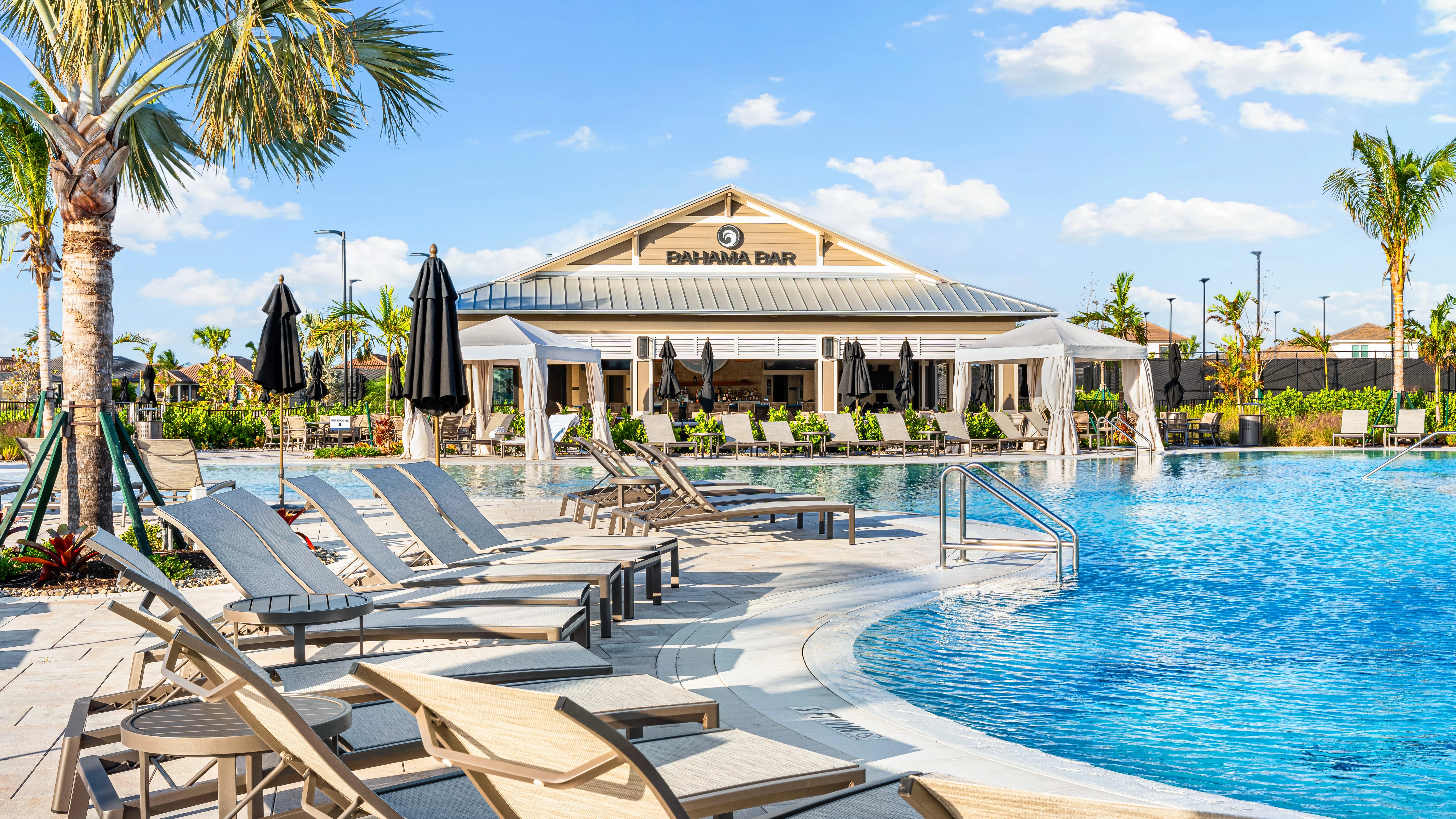
Esplanade launched in Florida about fourteen years ago and has since expanded into North Carolina, California, and (most recently) Nevada. This last one, near Las Vegas, is expected to command record lot and option premiums.
“The unique value proposition [of Esplanade communities] drives superior home prices and gross margins that consistently exceed the balance of our business,” said Palmer. These buyers know exactly what they want — and are willing to pay for it.
Taylor Morrison plans more than twenty new Esplanade community openings this year alone. “With a strong pipeline of Esplanade communities coming soon and opportunities for brand expansion in many of our markets,” said Palmer on a recent earnings call, “we expect this segment’s contribution to our bottom line to grow meaningfully in the years ahead.”
Culture matters. “It’s not a soft, squishy word,” said Palmer, “and it should never come across like we’re soft and we’re so nice [that] we can’t make hard decisions. That’s not it. We are nice, we are kind, and we treat people with respect — but that doesn’t mean we don’t make good, difficult business decisions and have hard discussions. It just means there is a right way and a wrong way to treat people.”
Much like Warren Buffett’s admonition to Salomon employees once upon a time, Palmer advises her staff to always do the right thing. “If it causes us to miss our numbers,” she said, “we’ll [live] with that.”
As a result, the figurative Taylor Morrison trophy case is getting pretty crowded. As of January, the company earned the title of America’s Most Trusted Home Builder from Lifestory Research for a record eleventh consecutive year. Forbes has named it to both the Most Trusted and Best Companies lists — and Fortune followed suit this year with a spot for Taylor Morrison on its World’s Most Admired Companies list.
Love the quote at the end about being nice but also not shying away from hard conversations. It simply means they approach decisions and dealing with people the right way, not that they avoid conflict all together.
Maybe getting to 55 won’t be so bad..