
Apple celebrated its 50th anniversary last week.
The company is of perpetual interest to me — not only for the remarkable loyalty its products command among customers (and the ensuing halo effect that lifts the rest of its catalog), but also because it remains Berkshire Hathaway’s largest stock holding and arguably Warren Buffett’s greatest investment ever.
There is one other reason, too.
Few people can appreciate what Greg Abel is going through right now better than Tim Cook. Both men were handed the daunting task of succeeding a legend — stepping into the enormous shadow of a larger-than-life predecessor whose genius and personality seem impossible to match.
Cook has called Steve Jobs, who co-founded Apple and later returned to rescue it from near-collapse, as “a once-in-a-thousand-years type of person”. That same description could certainly be applied, without exaggeration, to Warren Buffett. Each built a business empire so intertwined with his own personal brilliance that the company felt utterly inseparable from the individual himself.
The number of people who successfully filled such enormous shoes is vanishingly small. Cook managed to do so — growing Apple’s market cap from $350 billion to $3.8 trillion in just fourteen years — and now Abel will walk that same tightrope.
With that in mind, I enjoyed Cook’s recent interview with CBS Sunday Morning to commemorate the milestone anniversary. Particularly when he shared the circumstances and challenges of replacing Jobs — and how he followed in the late founder’s footsteps while also charting his own course as CEO.
(1) Honor the legend without getting paralyzed by the past
Tim Cook’s situation before becoming CEO was fairly similar to Greg Abel’s over the past few years. Cook had already run Apple’s day-to-day operations while Steve Jobs battled cancer and was widely seen as the presumptive heir to the throne.
Still, no one knew exactly when the inevitable transition would occur because Jobs (like Buffett) would decide for himself when to retire.
When that day finally arrived — in 2011 — Jobs offered his hand-picked successor a single bit of wisdom. “His advice to me,” said Cook, “was ‘Never ask what I would do. Just do the right thing.’”
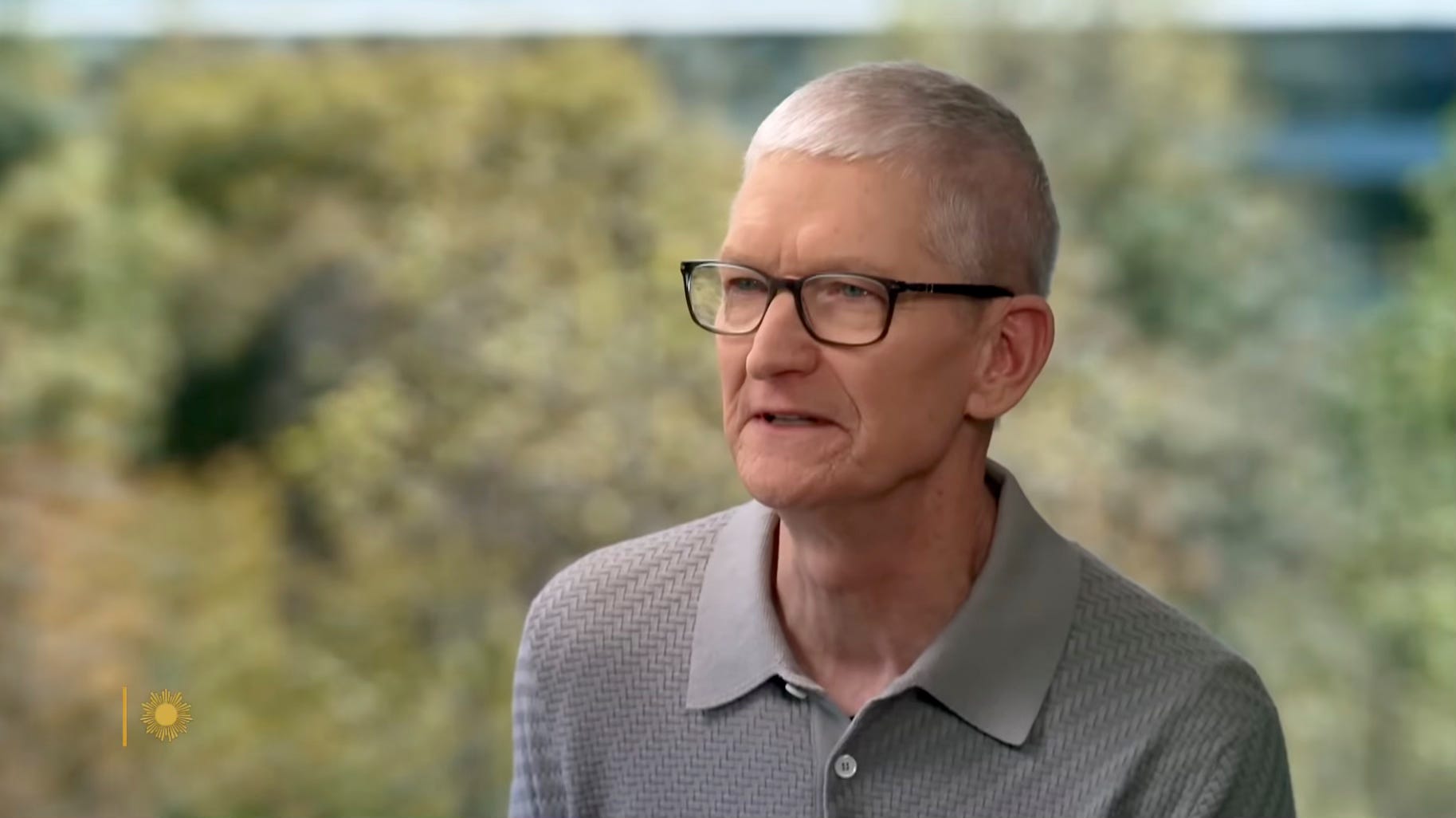
“He told me the story behind this [advice]. He was very close to Disney [and] he had watched Disney go through this paralysis of sitting around and talking about what Walt would do. He did not want that for Apple. He wanted a professional transition at CEO — because Apple had never had one before.”
After Walt Disney passed away in 1966 — and following his brother Roy’s death in 1971 (shortly after opening Walt Disney World) — the company stumbled through more than a decade of self-doubt and creative stagnation. Box office receipts suffered and critics panned the studio’s efforts. It took a few close calls with hostile takeovers to shake Disney from its malaise and force it to find its footing.
Jobs understood that, in the fast-moving technology industry, Apple could ill afford a similar detour. And, by freeing Cook in this manner, he set the stage for the iPhone maker’s incredible run to the top of American industry.
“It was such a gift for me,” said Cook, “because it took off of my shoulders this question of ‘What Would Steve Do?’ A lot of other people [still] ask that — although not so much in the company — but I never did. I just put my head down and thought, ‘I’m going to be the best version of myself.’”
Cook also drew a vital distinction between cowering in the shadow of a giant and honoring the enduring principles left behind. “[Steve’s] DNA is deep in this company,” said Cook. “We revere him. There is not a day that goes by that I don’t think about him. Not about what he would be doing and second-guessing things, but just the fact that he had such great vision and such great principles that all of this time later it still serves as the guide rails for a company like Apple.”
The principles remain sacrosanct, but their execution belongs to the living.
(2) Different skills for different seasons
It’s probably safe to say that Warren Buffett agrees with Tim Cook being “the best version of [himself]” rather than a pale imitation of Steve Jobs.
In last week’s CNBC interview, Buffett lavished praise on Cook — and how he has played the hand he was dealt better than anyone could have ever imagined.
“He couldn’t have done what Steve Jobs did,” said Buffett, “but Steve Jobs handed him a hand that Steve would not have done as well [with]. Steve picked him, when you get right down to it. Tim is a fantastic manager — and he’s a good guy.”
Jobs was the visionary genius who conjured revolutionary products that redefined entire industries. Cook, by contrast, made his mark as a master operator who tamed global supply chains and scaled manufacturing/distribution resources to turn Apple into the behemoth it is today.
Basically, Steve came up with the killer ideas — and then Cook ensured that they could be produced at the volume and quality needed to realize their full potential. Different strengths for different stages of the company’s evolution.
I suspect Buffett views Berkshire Hathaway in much the same light today. He has handed Greg Abel a company that evolved from (mostly) an investment vehicle into a vast collection of operating businesses — and Abel may be better suited to optimizing those subsidiaries in ways that even Buffett, for all his brilliance in capital allocation, could not.
Time will tell whether that turns out to be true or not.
(3) FOCUS
Apple and Berkshire Hathaway could hardly be more different on the surface. One is sleek, innovative, and often on the cutting edge of technology and consumer desire. The other, a diversified collection of stable, “boring” businesses that prioritize steady progress and certainty over excitement and risk. I mean, while all of us love Berkshire and what it stands for, I don’t think there’s much question that a new iPhone sets people’s hearts racing more than reinsurance policies and BNSF locomotives.
Yet the two companies share one powerful trait.
An intense, almost ruthless focus on the business at hand.
“[Steve Jobs] had an idea of focus that you say no to a thousand things to say yes to the one that’s truly important,” Cook told CBS. “Good isn’t good enough. It has to be insanely great.”
That same discipline defined Warren Buffett and Charlie Munger’s approach. Buffett is famous for rejecting potential investments within seconds of hearing about them. And Charlie’s own penchant for brusque refusal earned him the affectionate moniker “The Abominable No-Man”.
When biographer Alice Schroeder asked Buffett the secret to his success, his simple answer was “Focus”. He concentrated exclusively on businesses he could understand and, once an idea passed his strict filters, he immersed himself in every last detail.
Berkshire was built — brick by brick — through the power of selective rejection. Saying no to nearly everything so that the rare ideas worthy of a yes could receive the full weight of its attention and capital.
Another insightful article, Kevin!
Some people think that Warren’s purchase of Apple was evidence of a shift to tech stocks. Warren has said jokingly that he saw his grandkids running around with iPhones. That, of course, simplifies Warren’s thinking. Before the iPhone and iPad Apple was a company with unpredictable earnings and, therefore, no predictable value. These two devices changed that, but what, I think, really caught Warren’s attention was the ease of upgrading both devices coupled with the hundreds of apps that we users can easily download. These two capabilities have built an enormous moat around Apple. The cost of converting to a Droid is enormous. Does anyone bother thinking of upgrading to a Droid? No, we go to an Apple Store; the sales person checks to see that the device is currently backed up, transfers your account, and walking/driving home the backup is being restored to the new device. Tim Cook has done a superior job of widening the moat. Apple’s return on invested capital remains very high.
Greg his inheriting a different set of assets, but I’m confident that Warren has encouraged him to do what is right.
Excellent!